
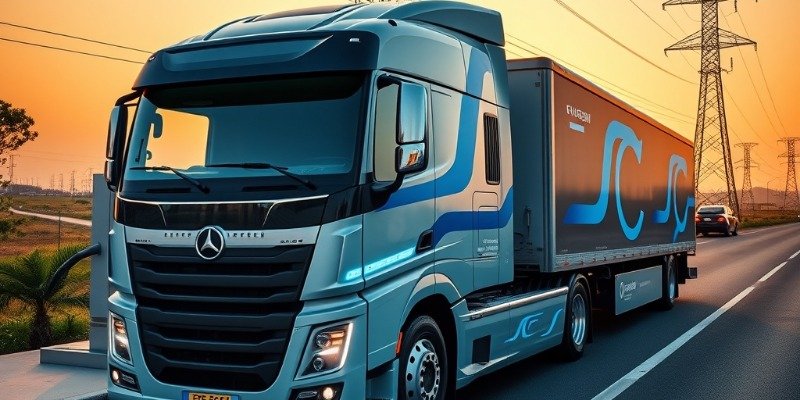
India's push to decarbonise heavy transport has taken a concrete shape with the National Green Hydrogen Mission setting a target of at least 1,000 hydrogen-powered trucks and buses on roads by 2030. The plan, backed by an outlay of Rs 19,744 crore, aims to make hydrogen a practical alternative for long-haul freight where battery-electric vehicles face payload and charging-time constraints. Abhay Bakre, Mission Director of the National Green Hydrogen Mission, has indicated that up to 50 such vehicles could be operational by the end of 2025, marking the start of a phased rollout across key freight corridors.
Why hydrogen for heavy trucks and buses
Battery-electric trucks work well for short-haul and urban duties, but they struggle with weight and range on long-distance routes. Hydrogen fuel-cell vehicles offer higher energy density, which means lighter onboard storage and more payload capacity. Refuelling takes minutes, comparable to diesel, reducing downtime for fleet operators. The government has identified these advantages as critical for the medium and long-haul segments that move the bulk of India's freight. The mission also supports hydrogen internal combustion engine retrofits, giving existing fleets a transition pathway without full vehicle replacement.
The hydrogen highways pilot and refuelling network
A flagship step is the hydrogen highways programme launched by Road Transport and Highways Minister Nitin Gadkari. With a Rs 500 crore allocation, the pilot covers 37 heavy vehicles and nine refuelling stations across 10 key freight corridors. Industry partners include Tata Motors, Ashok Leyland, Volvo, BPCL, IOCL, NTPC, and Reliance. The broader strategy aims to place hydrogen refuelling stations every 200 km, beginning with short corridors of 100 to 200 km. Longer routes such as Delhi-Mumbai are under evaluation. Decentralised production using biogas is also being explored to keep hydrogen affordable and supply resilient.
Production targets and industry momentum
The National Green Hydrogen Mission targets 5 million metric tonnes of annual green hydrogen production by 2030, supported by 60 to 100 GW of electrolyser capacity. Major Indian conglomerates are investing across the value chain. Tata Motors, Ashok Leyland, and Olectra Greentech are developing prototypes and pilot fleets. Energy firms like Reliance and BPCL are building the refuelling backbone. Electrolyser manufacturing is also taking root domestically, with companies such as HYDGEN setting up production in Pune. The mission has earmarked Rs 496 crore for mobility pilots in FY26, alongside pilots in steel, shipping, and stationary storage.
Challenges that remain
Green hydrogen currently costs between $4 and $5 per kilogram, nearly double the price of grey hydrogen derived from natural gas. Bringing this down to around $2 per kg requires cheaper renewable power, lower electrolyser costs, and reduced transmission and distribution losses. Infrastructure for storage, transport, and safety standards is still nascent. The intermittent nature of renewable energy also calls for grid-scale storage to ensure round-the-clock hydrogen production. Policy incentives, carbon pricing, and green hydrogen consumption mandates for sectors like refineries and fertilizers are being considered to create assured demand.
What this means for logistics operators
For fleet owners, the next five years will be about pilot participation, data collection, and total-cost-of-ownership analysis. Early adopters on designated corridors will benefit from subsidised fuel and infrastructure access. As station density improves, hydrogen trucks can replace diesel units on fixed long-haul routes without the range anxiety or payload penalty of battery alternatives. The complementarity with electric trucks — batteries for short haul, hydrogen for long haul — is emerging as the consensus decarbonisation model for Indian freight.
FAQs
How many hydrogen trucks and buses does India plan to deploy by 2030?
The government has set a target of at least 1,000 hydrogen-powered trucks and buses in commercial operation by 2030, with an initial batch of up to 50 vehicles expected by the end of 2025.
What is the budget allocation for the National Green Hydrogen Mission?
The mission was approved in January 2023 with a total outlay of Rs 19,744 crore (approximately $2.36 billion) through 2030, of which Rs 496 crore is allocated for mobility pilots in FY26.
Which companies are involved in the hydrogen highways pilot?
The pilot involves 37 heavy vehicles and nine refuelling stations across 10 freight corridors. Partners include Tata Motors, Ashok Leyland, Volvo, Olectra Greentech, BPCL, IOCL, NTPC, and Reliance.
Why is hydrogen considered better than batteries for long-haul trucks?
Hydrogen fuel-cell trucks offer higher energy density, preserving cargo space and payload. Refuelling takes minutes, similar to diesel, whereas battery charging can take hours and adds significant weight that reduces freight capacity.
What are the main challenges for green hydrogen adoption in transport?
High production cost (currently $4-5 per kg), lack of widespread refuelling infrastructure, intermittent renewable power supply, and the need for safety standards and storage solutions are the primary hurdles.