
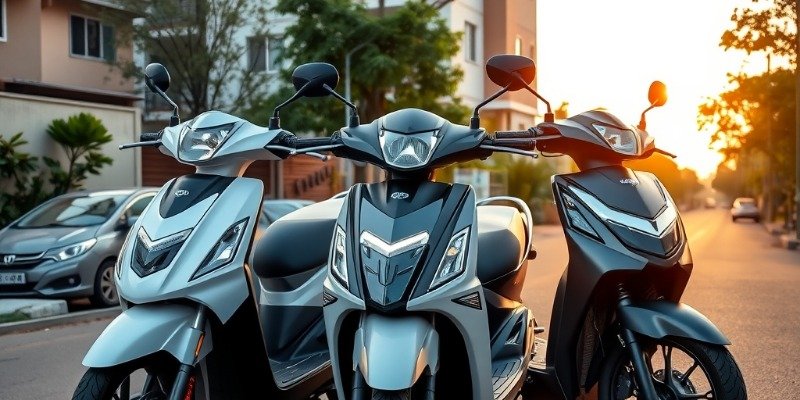
The Indian electric scooter market has grown rapidly in the last few years. Families looking for a practical, low-running-cost two-wheeler now have several strong options. Three names come up in almost every discussion: the Ola S1 Pro, the Ather 450X and the TVS iQube. Each takes a different approach to the family-scoter formula. This article breaks down their prices, range, performance, features and real-world behaviour so you can decide which one fits your daily needs.
Price and Positioning
The Ola S1 Pro is the most affordable of the three at Rs 1,26,382 ex-showroom. The TVS iQube starts close by at Rs 1,20,124 ex-showroom for the base variant, but the range-topping ST 5.3 kWh version goes up to around Rs 1.77 lakh before subsidies. The Ather 450X sits at a premium with an ex-showroom price of Rs 1,51,046. On-road prices will be higher in each case due to insurance, registration and local levies. Ola and TVS offer multiple variants with different battery sizes, so the final cost depends on which version you pick. Ather currently sells the 450X in a single well-equipped trim.
Battery, Range and Charging
Battery capacity is the biggest differentiator. The Ola S1 Pro uses a 3 kWh pack, the Ather 450X a 2.9 kWh pack, and the TVS iQube offers choices from 2.3 kWh to 5.3 kWh depending on the variant. Certified IDC range figures are 176 km for the Ola S1 Pro, 126 km for the Ather 450X, and 114 km to 212 km for the TVS iQube across its lineup. Real-world range is always lower than the certified number. In a controlled hill-climb test at Lavasa, riders maintained 30–40 km/h in eco mode. The Ola S1 Pro covered 93 km before the battery hit its reserve limit, the TVS iQube managed 83 km, and the Ather 450X stopped at around 79 km. The Bajaj Chetak in the same test did 68 km.
Charging times differ. The Ather 450X takes about 4.3 hours for a full charge with its 700 W charger. The Ola S1 Pro needs roughly 6.5 hours on its 350 W home charger. The TVS iQube variants charge in around 4.5 to 5 hours depending on the battery size. All three can be charged overnight at a regular 5 A socket. Ola is also building a fast-charger network called Hypercharger, while Ather has its Ather Grid points in many cities. TVS relies on its growing dealer network and third-party chargers.
Performance and Ride Quality
The Ather 450X has the most powerful motor at 6.4 kW peak, but its claimed top speed is 90 km/h. The Ola S1 Pro uses a 5.5 kW mid-drive IPM motor and claims 117 km/h top speed. The TVS iQube tops out at 82 km/h on most variants, with the entry 2.3 kWh version limited to 68 km/h. In the hill-climb test, the TVS iQube was the quickest to the first checkpoint and held 35–40 km/h steadily in eco mode on the incline. The Ather 450X could not sustain speeds above 30 km/h uphill, and its performance dropped further as the battery depleted. The Ola S1 Pro struggled in eco mode on the climb and had to be switched to normal mode, after which it delivered seamless performance and the highest overall range.
Ride character separates them clearly. The TVS iQube uses conventional telescopic front forks tuned for comfort. Reviewers describe it as a safe, easy, family-oriented scooter that absorbs bumps well. The Ather 450X runs a firmer, sportier setup with a single-sided front fork. It feels sharp in corners and light in traffic (108 kg kerb weight), but the ride can feel stiff on broken roads. The Ola S1 Pro weighs 109 kg and is described as agile with good handling, though its suspension tuning leans toward the sporty side as well. Ground clearance is 170 mm on the Ather, 160 mm on the Ola, and TVS does not publish a single figure across variants but is comparable.
Features and Technology
All three get LED lighting, digital instrument clusters, Bluetooth connectivity, smartphone apps, navigation support, regenerative braking and multiple riding modes. The Ola S1 Pro adds external speakers, keyless unlock via phone proximity, a 7-inch touchscreen, cruise control, reverse assist, roadside assistance and vacation mode. The Ather 450X runs an Android-based dash with a Snapdragon 212 processor, supports Google Maps and AutoHold, but those features require a separate Pro Pack subscription costing Rs 17,000–20,000. The TVS iQube uses a 7-inch display with a large bezel and relies on a joystick for input; many functions are managed through the companion app. TVS also offers a large 32-litre underseat storage on the ST 5.3 kWh variant. The Ola S1 Pro provides 34 litres of underseat space, while the Ather 450X offers 22 litres, which shrinks further when the portable charger is stored inside.
Practicality and Storage
For a family scooter, boot space matters. The Ola S1 Pro leads with 34 litres, enough for a full-face helmet and a few groceries. The TVS iQube ST matches that with 32 litres on the top variant, but lower variants have less space. The Ather 450X’s 22-litre boot is the smallest and the portable charger takes up a noticeable chunk of it. All three have a carry hook, USB charging port and a flat floorboard. The TVS iQube’s conventional design and wide rear seat make it the most natural choice for two-up family rides. The Ather 450X’s single-piece seat is comfortable for the rider but the pillion perch is narrower. The Ola S1 Pro’s seat is wide and well-padded, and the large boot adds to its practicality score.
Service Network and Ownership Experience
TVS Motor has the widest and most established dealer and service network among the three. This translates to easier access to spare parts, routine maintenance and warranty support in smaller towns. Ather has expanded its service centres steadily and offers a 10,000 km service interval with a 10-year or 1,00,000 km battery warranty on its newer models, which is a strong ownership signal. Ola’s service experience has been described as inconsistent by users and reviewers. While Ola’s direct-to-consumer model and large factory allow aggressive pricing, buyers should check the nearest authorised service centre and read local owner feedback before committing. Insurance costs are roughly Rs 7,500 for the Ather 450X and Rs 5,500 for the Ola S1 Pro; TVS iQube insurance will vary by variant.
Real-World Test Insights
The ZigWheels hill-climb test at Lavasa revealed practical differences that brochures do not show. The TVS iQube delivered the most consistent performance, held speed in eco mode on steep inclines, and its regenerative braking was the most effective, actually increasing the distance-to-empty reading on the descent. However, the TVS iQube shuts down suddenly when the battery is depleted, which can be unsafe if it happens in traffic. The Ather 450X’s range prediction is highly accurate, and its lights and console stay on even after the battery is exhausted, giving the rider time to pull over safely. The Ola S1 Pro’s large battery gave it the highest absolute range, but it locks the rider into eco mode below 15 percent charge, limiting uphill performance. It also stops with about 5 percent reserve left, so the usable capacity is closer to 85 percent of the pack on hilly roads.
Which One Should You Choose
Pick the TVS iQube if you want a familiar, comfortable family scooter backed by a vast service network, predictable ergonomics and good boot space on the higher variants. It is the safest all-round choice for buyers who prioritize peace of mind over outright performance. Pick the Ather 450X if you value sharp handling, a premium tech interface, accurate range estimates and a strong warranty package, and you are willing to pay a premium and accept a firmer ride and smaller boot. Pick the Ola S1 Pro if you want the longest real-world range per charge, the most features for the money, a large boot and a high top speed, and you are comfortable verifying service support in your area. Each scooter does the basic job of daily commuting well; the decision comes down to which trade-offs align with your family’s routine.
FAQs
What is the real-world range of these scooters in city traffic?
In a controlled test at steady 30–40 km/h in eco mode, the Ola S1 Pro delivered 93 km, the TVS iQube 83 km, and the Ather 450X around 79 km. In typical city stop-and-go traffic with mixed modes, expect 10–20 percent less than these figures.
Which scooter has the largest underseat storage?
The Ola S1 Pro offers 34 litres, the TVS iQube ST 5.3 kWh variant offers 32 litres, and the Ather 450X provides 22 litres, which reduces further when the portable charger is kept inside.
Does the Ather 450X require a subscription for navigation and AutoHold?
Yes. Features like Google Maps navigation and AutoHold are locked behind the Pro Pack subscription, which costs between Rs 17,000 and Rs 20,000 depending on the tenure.
How does the TVS iQube behave when the battery runs out?
The TVS iQube shuts down suddenly with no reserve mode. This can happen while riding at 25–30 km/h, so riders should plan charging stops well before the indicated range hits zero.
Which scooter has the best service network for a buyer in a tier-2 city?
TVS Motor has the most widespread dealer and service network across India, making it the easiest to maintain in smaller towns. Ather is expanding fast but still lags behind TVS in total touchpoints. Ola’s service network is growing but user reports highlight inconsistent experiences.