
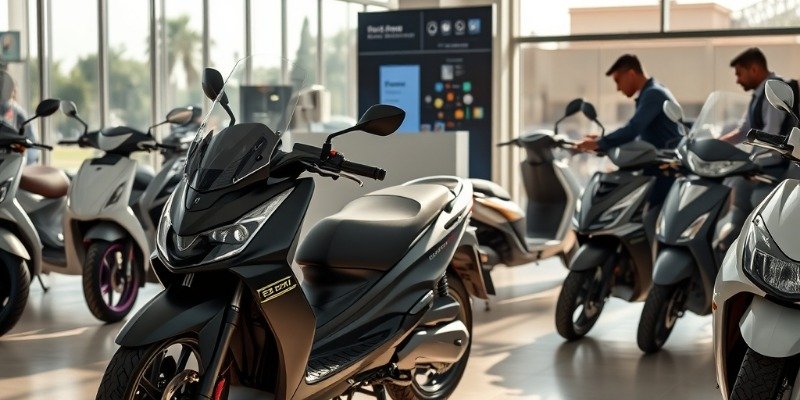
India's electric vehicle market recorded its best-ever October in 2026. According to data released by the Federation of Automobile Dealers Associations (FADA), EV retail sales touched 3.55 lakh units, marking a 44.88 percent jump from the same month last year. Overall EV penetration rose to 11.5 percent, nearly double the 6 percent seen a year earlier. While the numbers paint a picture of rapid adoption, FADA President Sai Giridhar has flagged a growing crisis behind the scenes — dealers are earning the lowest margins on EVs anywhere in the world.
Record sales across every segment
The surge was broad-based. Electric two-wheelers led with 2.24 lakh units sold, up 48.49 percent year-on-year. Their market share doubled to 9.7 percent from 4.7 percent in October 2025. Electric passenger vehicles grew even faster at 76.47 percent, reaching 37,049 units with a 7.3 percent share. Electric three-wheelers, now close to 63 percent of the segment, added 88,570 units, up 24.76 percent. Even electric commercial vehicles more than doubled to 4,492 units. FADA noted this was a best-ever October for every EV category.
Why demand is outpacing supply
Giridhar told ETAuto that demand ran ahead of supply in both the two-wheeler and passenger vehicle segments. Three key factors are driving this pull. Petrol and diesel prices remain elevated. Electric vehicle driving ranges have improved materially. And EV prices are increasingly at par with comparable internal combustion engine models. The result is that availability, not demand, has become the binding constraint. Uncertainty in the Middle East has also kept fuel prices high, nudging more buyers toward electric options.
The hidden cost: dealers earn the lowest margins globally
Despite rising volumes, dealers are under severe financial pressure. Giridhar stated bluntly that India is one market where dealers get the lowest margins on electric vehicles globally. Dealerships must invest heavily in specialised workshops, diagnostic tools, and trained technicians to service EVs. These facilities cost as much as ICE workshops but generate lower revenue because EVs have fewer moving parts and need less frequent servicing. The after-sales revenue stream that sustains traditional dealerships is shrinking.
Expanding networks add to short-term costs
Dealers are also expanding into Tier 3 and Tier 4 towns to build sales and service networks for the next wave of EV buyers. This expansion requires upfront capital for infrastructure, hiring, and training. While necessary for long-term growth, it adds to immediate cost pressures. FADA has called for dealer margins to be aligned with global standards so these investments remain viable.
Rising operating expenses squeeze profitability further
Beyond EV-specific costs, dealerships face higher workforce expenses across the board. Recruiting and retaining skilled staff has become more expensive. Workshops need continuous upgrades to handle newer vehicle technologies. Giridhar warned that sustained profitability pressure could eventually affect customer service standards. Unlike vehicle manufacturers, dealers cannot pass on rising costs through higher prices. They have no markup flexibility — the price is set by the OEM.
Digitalisation seen as a productivity lever
FADA believes digitalisation can help dealers serve more customers without a proportional increase in headcount. Technology can streamline sales processes, improve lead conversion, and optimise workforce utilisation. Giridhar urged OEMs and dealers to collaborate on solving the profitability puzzle together, especially as the industry invests in new technologies and expands its market presence.
What this means for the EV ecosystem
The economics of dealership operations and after-sales service need as much attention as vehicle production and charging infrastructure. If dealer viability erodes, the retail and service backbone of India's EV transition could weaken. Policymakers and OEMs must recognise that sustainable adoption depends on a healthy dealer network. Competitive margins, not just volume targets, will determine whether the last mile of EV delivery holds firm.
The October 2026 numbers confirm that Indian buyers are ready for electric mobility. The challenge now is ensuring the businesses that sell and service these vehicles can survive the transition.
FAQs
How many electric vehicles were sold in India in October 2026
EV retail sales reached 3.55 lakh units in October 2026, up 44.88 percent from the same month last year. This was an all-time high for the month of October.
What was the EV penetration rate in October 2026
Overall EV penetration stood at 11.5 percent of total vehicle retail, nearly double the 6 percent recorded in October 2025.
Which EV segment grew the fastest in October 2026
Electric passenger vehicles posted the highest growth at 76.47 percent year-on-year, reaching 37,049 units. Electric two-wheelers grew 48.49 percent to 2.24 lakh units.
Why are dealers saying EV margins are the lowest globally
Dealers must invest in specialised EV workshops, tools, and trained technicians, but these workshops generate less revenue than ICE workshops because EVs need less frequent servicing. Dealers also cannot increase vehicle prices to offset rising costs.
Is EV demand higher than supply right now
Yes. FADA confirmed that demand is outpacing production in both the two-wheeler and passenger vehicle segments. Availability has become the binding constraint, not buyer interest.