
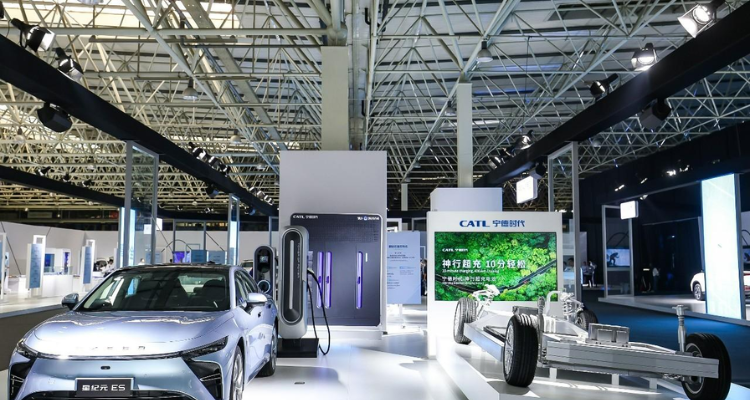
China’s battery giant CATL has unveiled a next-generation EV battery capable of charging from 10% to 98% in just about six minutes. At a time when charging speed remains one of the biggest concerns for electric vehicle users, this breakthrough feels less like an incremental upgrade and more like a leap into the future.
What makes this innovation even more remarkable is its resilience under extreme conditions. The battery reportedly maintains impressive performance even in temperatures as low as -30°C, completing a near-full charge in roughly nine minutes. In practical terms, this means EV drivers in colder regions—who often face longer charging times and reduced battery efficiency—could soon experience convenience comparable to, or even better than, traditional fuel-powered vehicles.
For years, the promise of electric mobility has been held back by a simple psychological barrier: range anxiety. The fear of running out of charge and the time it takes to recharge have made many consumers hesitant to fully embrace EVs. But with charging times now approaching, and in some scenarios even rivaling, real-world petrol refueling stops, that hesitation may finally begin to fade.
This breakthrough also signals a broader shift in how the EV ecosystem is evolving. Faster charging isn’t just about saving time—it changes how people perceive ownership. Long-distance travel becomes easier, urban charging infrastructure becomes more efficient, and fleet operators can significantly reduce downtime. In effect, this could accelerate EV adoption across both personal and commercial segments.
While real-world deployment, infrastructure readiness, and cost factors will ultimately determine how quickly this technology reaches consumers, one thing is clear: the gap between electric and conventional vehicles is closing faster than ever. And if innovations like this continue, the question may no longer be if EVs will dominate the roads—but how soon.
EV Cost Calculator & Compare Tool
EV Running Cost Calculator
Estimate your EV's running costs.
Calculation Type
Estimated Cost
₹--
Estimated Cost Per Kilometer
₹--
Calculations are estimates based on provided values.