
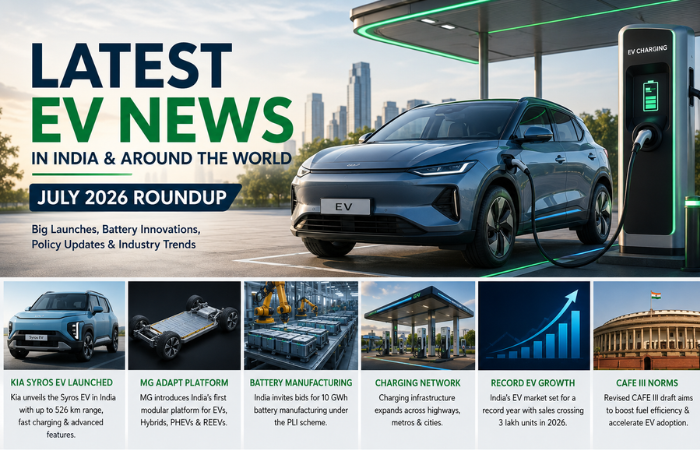
The electric vehicle industry continues to evolve rapidly, with July 2026 bringing significant announcements from manufacturers, policymakers, and technology companies. From the launch of new electric SUVs to major investments in battery manufacturing and charging infrastructure, the EV ecosystem is expanding at an impressive pace.
In this roundup, we cover the biggest developments shaping the EV industry in India and around the world.
Kia Syros EV Officially Enters the Indian Market
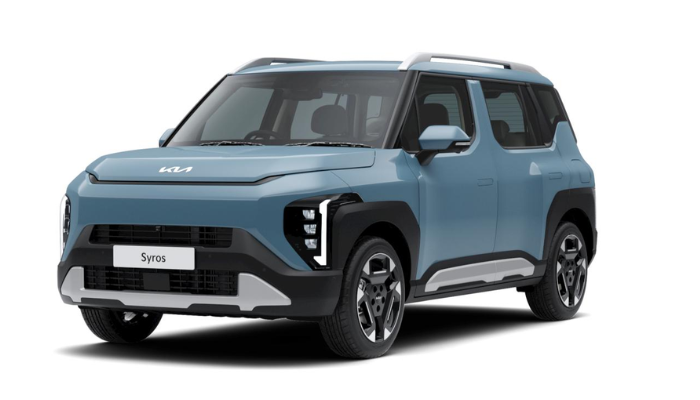
One of the biggest highlights this month is the arrival of the Kia Syros EV. The company has introduced the electric SUV with two battery pack options designed to suit different customer needs.
The Syros EV is positioned as a premium family SUV offering modern styling, connected technology, and competitive driving range.
Key Highlights
- Two battery options
- Up to 526 km claimed range
- DC fast charging support
- Advanced ADAS features
- Connected infotainment system
- Panoramic display
- Premium interior
The model strengthens Kia’s electric portfolio and targets buyers looking for an alternative to existing midsize electric SUVs.
MG Introduces the ADAPT Vehicle Platform
JSW MG Motor has unveiled India’s first modular platform capable of supporting multiple powertrain technologies.
Known as the ADAPT platform, it can be used for:
- Battery Electric Vehicles (BEVs)
- Hybrid vehicles
- Plug-in Hybrid Electric Vehicles (PHEVs)
- Range Extender Electric Vehicles (REEVs)
Instead of developing separate vehicle architectures, MG can build different powertrain options using the same base platform, reducing manufacturing costs while improving flexibility.
This approach is expected to help manufacturers respond more quickly to changing consumer demand.
India Expands Domestic Battery Manufacturing
Battery production remains one of the most important factors influencing EV prices.
The Government of India has invited fresh bids for 10 GWh of Advanced Chemistry Cell (ACC) battery manufacturing under the Production Linked Incentive (PLI) scheme.
Why This Matters
Domestic battery production can:
- Reduce dependence on imports
- Lower battery costs
- Improve supply chain stability
- Generate employment
- Increase localization
- Make EVs more affordable
As batteries account for nearly 35–45% of an electric vehicle’s total cost, local manufacturing could significantly reduce vehicle prices over the next few years.
Charging Infrastructure Continues to Grow
Charging availability has long been considered one of the biggest barriers to EV adoption.
However, both public and private organizations are rapidly expanding charging infrastructure.
Current developments include:
- Highway fast chargers
- Urban charging hubs
- Metro station charging points
- Residential charging solutions
- Commercial fleet charging
Several state governments are also encouraging private investment to accelerate charger deployment.
The improved charging network is expected to reduce range anxiety for both personal and commercial EV users.
Record Growth in India’s EV Market
Industry reports indicate that India’s electric vehicle market is on track for another record-breaking year.
Passenger EV sales continue to grow because of:
- Better product availability
- Competitive pricing
- Improved charging network
- Government incentives
- Lower running costs
Experts believe electric mobility is gradually moving from an early adoption phase toward mainstream acceptance.
Global EV Sales Continue to Rise
Electric vehicle adoption is accelerating worldwide.
According to recent industry estimates, more than 20 million electric vehicles were sold globally during 2025, representing approximately one out of every four new vehicles sold.
Major markets include:
- China
- Europe
- United States
- India
This rapid expansion has encouraged manufacturers to invest heavily in battery technology, software-defined vehicles, autonomous features, and charging infrastructure.
Affordable Electric Cars Are Becoming More Common
Manufacturers are now focusing on the mass market instead of premium buyers alone.
Upcoming affordable EVs are expected to feature:
- 300–500 km driving range
- Connected technology
- Fast charging
- Improved safety
- Lower ownership cost
This trend could accelerate EV adoption in Tier-2 and Tier-3 cities.
Government Policies Continue Supporting EV Growth
Several policy initiatives continue to strengthen India’s EV ecosystem.
Key areas include:
- Battery manufacturing incentives
- Charging infrastructure expansion
- Local manufacturing support
- Vehicle scrappage benefits
- Research and development
These initiatives are expected to make India one of the world’s fastest-growing EV markets over the next decade.
CAFE III Regulations: What They Mean for EV Buyers
One of the biggest policy developments this month is the release of the revised draft for India’s Corporate Average Fuel Efficiency (CAFE) III norms. The proposed rules, expected to take effect from April 2027, introduce stricter fuel-efficiency targets while retaining the credit-trading mechanism. The draft also proposes revised compliance calculations and recognizes additional fuel-saving technologies such as start-stop systems, tyre pressure monitoring systems (TPMS), and mild-hybrid technology.
Why CAFE III Matters
The new regulations are expected to:
- Encourage automakers to launch more electric vehicles.
- Improve fuel efficiency across petrol and diesel models.
- Increase investment in hybrid and plug-in hybrid technology.
- Accelerate research into lighter and more efficient vehicle platforms.
For consumers, this means a wider choice of electrified vehicles over the next few years.
India’s Growing Role in the Global EV Industry
India is steadily emerging as an important player in the global electric mobility ecosystem.
Key strengths include:
- Expanding domestic manufacturing
- Government support through incentive schemes
- Growing battery production capacity
- Increasing localisation of EV components
- Strong demand in two-wheelers and passenger vehicles
As global manufacturers continue investing in India, the country is expected to become both a major consumer and exporter of electric vehicles.
| Development | Why It Matters |
|---|---|
| Kia Syros EV launch | Expands premium electric SUV options |
| MG ADAPT platform | Supports EV, Hybrid, PHEV and REEV models |
| 10 GWh battery manufacturing bids | Boosts local battery production |
| Revised CAFE III draft | Encourages cleaner and more efficient vehicles |
| Charging infrastructure expansion | Improves convenience for EV owners |
| Global EV sales continue growing | Demonstrates strong worldwide adoption |
Frequently Asked Questions
Which is the biggest EV news in July 2026?
The unveiling of the Kia Syros EV, India’s revised CAFE III draft norms, and continued investment in battery manufacturing are among the biggest developments this month.
Is India becoming an EV manufacturing hub?
Yes. Increased localisation, battery manufacturing initiatives, government incentives, and expanding production capacity are strengthening India’s position in the global EV industry.
Are EV prices expected to fall?
Battery localisation, manufacturing scale, and improving technology could gradually reduce EV prices over the next few years, although pricing will continue to depend on raw material costs and market demand.
Is charging infrastructure improving?
Yes. Public fast chargers, highway charging corridors, and residential charging solutions are expanding rapidly, making EV ownership more convenient.
July 2026 has been another milestone month for the electric vehicle industry. New product launches, stronger government policies, advances in battery technology, and expanding charging infrastructure all point toward continued growth.
Manufacturers are no longer treating EVs as niche products. Instead, they are becoming a core part of future mobility strategies, offering buyers more choice across different price segments.
For consumers, this means better vehicles, improved charging convenience, and lower ownership costs. For India, it represents an opportunity to become one of the world’s leading electric mobility markets over the coming decade.
Whether you’re planning to buy your first EV or simply following the industry’s rapid evolution, the months ahead promise even more innovation and competition.
EV Cost Calculator & Compare Tool
EV Running Cost Calculator
Estimate your EV's running costs.
Calculation Type
Estimated Cost
₹--
Estimated Cost Per Kilometer
₹--
Calculations are estimates based on provided values.