
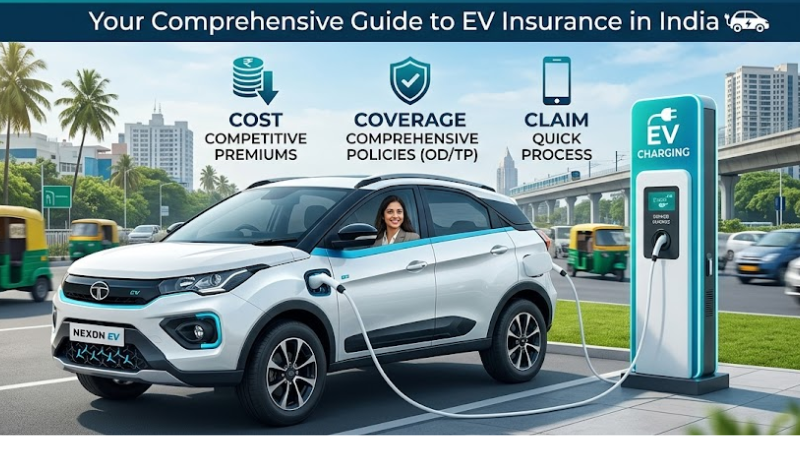
Electric vehicles (EVs) are becoming increasingly popular across India. Rising fuel prices, government incentives, and improved charging infrastructure have encouraged more people to switch from petrol and diesel vehicles to electric ones. Whether it’s an electric scooter for daily commuting or an electric SUV for family trips, EVs are now a common sight on Indian roads.
However, buying an electric vehicle is only part of the journey. Protecting that investment with the right insurance is just as important. Since EVs have expensive components like battery packs and electric motors, understanding how EV insurance works can help you avoid unexpected expenses in the future.
What is Electric Vehicle Insurance?
Electric vehicle insurance is a motor insurance policy designed specifically for battery-powered vehicles. Like regular vehicle insurance, it offers financial protection against accidents, theft, fire, natural disasters, and third-party liabilities. However, it also takes into account the unique components found in electric vehicles, such as the battery, electric motor, and charging equipment.
A good EV insurance policy ensures that you don’t have to bear heavy repair or replacement costs if your vehicle is damaged due to covered events.
Is EV Insurance Mandatory in India?
Yes, electric vehicle insurance is mandatory in India. Every vehicle driven on public roads must have at least a third-party insurance policy as per the Motor Vehicles Act. This rule applies to electric vehicles as well.
While third-party insurance fulfills the legal requirement, it only covers damages caused to another person, vehicle, or property. It does not pay for repairs to your own vehicle. That’s why many EV owners prefer comprehensive insurance, which provides much broader protection.
Types of Electric Vehicle Insurance
Third-Party Insurance
Third-party insurance is the minimum insurance required by law. It covers compensation for injuries, death, or property damage caused to another person because of your vehicle. However, it does not cover damage to your own electric vehicle.
Comprehensive Insurance
Comprehensive insurance offers complete protection for your EV. It covers third-party liabilities along with damages to your own vehicle caused by accidents, theft, fire, floods, cyclones, earthquakes, and other covered risks. Considering the high cost of EV components, comprehensive insurance is generally the smarter choice.
What Does EV Insurance Cover?
A comprehensive electric vehicle insurance policy covers a wide range of situations that could lead to financial loss.
It typically includes protection against accidental damage, theft, fire, natural disasters such as floods and cyclones, vandalism, and third-party liabilities. If your vehicle suffers damage due to one of these insured events, the insurance company pays for repairs or compensation according to the policy terms.
Many insurers also provide coverage for expensive EV components like the battery and electric motor when they are damaged due to insured incidents.
What is Not Covered?
Like every insurance policy, EV insurance also has certain exclusions.
Normal wear and tear, battery performance degradation over time, mechanical failures caused by aging, intentional damage, driving without a valid licence, driving under the influence of alcohol, and damages caused due to policy violations are generally not covered.
Reading the policy document carefully before purchasing can help you understand these exclusions and avoid claim disputes later.
Does EV Insurance Cover the Battery?
The battery is one of the most expensive parts of an electric vehicle, so many buyers wonder whether it is insured.
In most comprehensive insurance policies, battery damage resulting from accidents, fire, floods, or theft is covered. However, insurance does not usually cover gradual battery degradation or reduced performance caused by regular usage. Such issues are generally handled under the manufacturer’s battery warranty rather than the insurance policy.
Because coverage differs between insurers, it’s always a good idea to check the policy wording before making a decision.
Useful Add-On Covers for EV Owners
Insurance companies offer several add-on covers that provide extra protection beyond the standard policy.
Zero Depreciation Cover ensures you receive a higher claim amount without depreciation deductions on replaced parts. Roadside Assistance is useful if your EV breaks down, needs towing, or runs out of charge. Battery Protection Cover offers additional security against battery-related damages caused by covered incidents, while Consumables Cover helps pay for items that are normally excluded from standard insurance.
Although these add-ons increase the premium slightly, they can save a significant amount during claims.
How Much Does Electric Vehicle Insurance Cost?
There is no fixed premium for EV insurance. The cost depends on several factors, including the vehicle’s price, battery value, model, registration city, driver’s claim history, selected add-ons, and the insurer’s pricing policy.
Premiums for electric vehicles may sometimes be slightly higher than conventional vehicles because EV components are expensive to repair or replace. However, increasing competition among insurers and government support for electric mobility have helped make EV insurance more affordable in recent years.
Comparing policies from multiple insurers is one of the best ways to find the right balance between coverage and cost.
How to Buy Electric Vehicle Insurance
Buying EV insurance has become a simple online process. Most insurance companies allow customers to purchase or renew policies within a few minutes.
You generally need to enter your vehicle registration number, compare available plans, select the desired coverage and add-ons, pay the premium, and download the policy instantly. Buying online also makes it easier to compare features and premiums before making a final decision.
EV Insurance Claim Process
The claim process for electric vehicle insurance is straightforward if you follow the required steps.
The first step is to inform your insurance company immediately after the accident or incident. You will then need to register the claim by providing details such as your policy number, vehicle information, and a description of what happened.
After that, the insurer may appoint a surveyor to inspect the vehicle. Once the inspection is complete, the vehicle can be repaired either at a network garage through a cashless claim or at a non-network garage through reimbursement, depending on your policy. After all required documents are verified, the insurer processes the claim and settles it according to the policy conditions.
Documents Required for an Insurance Claim
Most insurance companies ask for a few standard documents during the claim process.
These usually include your insurance policy, vehicle registration certificate (RC), driving licence, claim form, repair estimate, photographs of the damage, and repair bills. In cases involving theft or major accidents, an FIR may also be required.
Keeping digital copies of these documents can help speed up the claim process.
Tips to Reduce Your EV Insurance Premium
There are several ways to lower your insurance premium without sacrificing important coverage.
Comparing policies from different insurers, maintaining a No Claim Bonus (NCB), renewing your policy on time, choosing only necessary add-ons, and installing approved anti-theft devices can all help reduce premium costs. Avoiding frequent small claims also helps preserve your NCB, which can lead to significant savings over time.
EV Cost Calculator & Compare Tool
EV Running Cost Calculator
Estimate your EV's running costs.
Calculation Type
Estimated Cost
₹--
Estimated Cost Per Kilometer
₹--
Calculations are estimates based on provided values.