
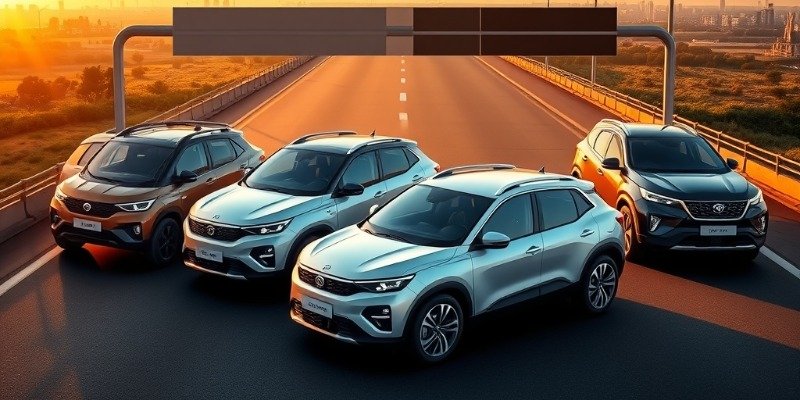
Tata Motors has laid out its most ambitious electric vehicle roadmap yet. The company confirmed it will launch four all-new electric cars by 2030 as part of a broader plan to introduce 30 new vehicles and seven fresh nameplates. The portfolio will grow from eight nameplates today to fifteen by the end of the decade. Four of the seven new nameplates will be pure electric models. The first of these is the Sierra EV, followed by the Safari EV, the premium Avinya sub-brand, and a completely redesigned next-generation Nexon EV. A compact SUV codenamed Kuno is also in the works. Here is a detailed look at each model, its expected launch window, platform underpinnings, and key specifications based on the latest official and industry sources.
Tata Sierra EV – First Off The Block
The Sierra EV is the earliest confirmed launch in Tata’s new EV wave. It is expected to arrive around the festive season of 2025, likely close to Diwali. The model was displayed at the 2025 Auto Expo in near-production form. It uses the brand’s new ARGOS platform, which is inherently modular and supports all-wheel drive. The design blends retro cues from the original 1990s Sierra with modern EV proportions. While the electric version leads the charge, Tata has also confirmed that petrol and diesel Sierra variants will receive an AWD option in 2027, and a dual-cylinder CNG version may join the range later. The Sierra EV will borrow platform and battery technology from the Harrier EV, targeting a claimed range of over 500 kilometres.
Tata Safari EV – Three-Row Electric Family SUV
The Safari EV is positioned as Tata’s first three-row all-electric SUV. Recent reports indicate a launch around Diwali 2026, with production slated to begin in August 2026. Some sources point to a January 2027 debut, possibly around the Bharat Mobility Global Expo. The vehicle will sit on the Acti.EV architecture with Tata’s Intelligent Digital Architecture Layer, enabling over-the-air updates, faster connectivity, and advanced ADAS features without software lag. Battery options are expected to include 65 kWh and 75 kWh packs, with a larger 80 kWh unit reserved for higher trims. The 80 kWh variant could deliver a claimed range exceeding 600 kilometres. Both rear-wheel-drive and dual-motor all-wheel-drive layouts will be offered. The cabin will feature a modern triple-screen setup, Level 2 ADAS, 540-degree camera, panoramic sunroof, ventilated front and rear seats, wireless charging, and a summon mode that lets the vehicle park itself or move to the driver’s location via the key fob. Six- and seven-seat configurations will be available. Pricing is estimated between ₹20 lakh and ₹32 lakh (ex-showroom). The direct rival will be the Mahindra XEV 9S.
Tata Avinya and Avinya X – Premium Sub-Brand Arrives In 2027
Tata’s premium electric sub-brand, Avinya, has been pushed to 2027, two years later than the original 2025 target. The delay stems from setbacks in local production plans for Jaguar Land Rover’s EMA platform, which was initially chosen for the Avinya range. Tata has since switched to the Chery JLR IMX platform, the same architecture that underpins the new Chery Freelander EV. This change is expected to accelerate development and bring more advanced technology to the line-up. The Avinya brand will comprise at least five models, internally designated P1 through P5. The first model, codenamed P1, will be built at Tata’s Sanand plant and is expected to carry a starting price above ₹35 lakh, making it Tata’s most expensive electric car to date. The Avinya X, previewed as a concept at the 2025 Bharat Mobility Global Expo, represents the larger variant in the initial line-up. Both models will use a Gen 3 skateboard platform — a born-electric architecture that delivers a flat floor, maximised cabin space, and radical styling. Battery packs will range roughly between 65 kWh and 80 kWh, with claimed figures of 650 to 700 kilometres. Interiors will be software-driven with a luxury focus, targeting buyers who currently consider German premium EVs.
Next-Generation Nexon EV (Project Garud) – Volume Seller Reimagined
The next-generation Nexon, internally codenamed Project Garud, is expected to launch around mid-2027, likely around Diwali. This marks a full generational change after ten years since the original 2017 launch. The biggest shift is the move to a new Atlas platform, described as an extensively reworked version of the current X1 architecture. It brings modern structural safety, improved packaging, and better interior space. Despite the platform update, Tata will retain its multi-fuel strategy: the new Nexon will offer 1.2-litre turbo petrol, 1.2-litre petrol-CNG, and a pure electric variant, all with manual and automatic choices. The diesel option remains uncertain. The EV version is promised to receive significant upgrades in battery packaging, cabin space, and range. Design will adopt Tata’s latest language with sharper front styling, new LED signatures, and a Sierra-like triple-screen dashboard. Features such as summon mode, panoramic sunroof, and ADAS will carry over. The new Nexon will arrive just as rivals like the VinFast VF5 and Hyundai Ioniq P enter the compact electric SUV segment.
Tata Kuno EV – Compact Contender For 2027-2028
A smaller electric SUV codenamed Kuno is under development. It is expected to arrive in 2027 or 2028 and will target the MG Windsor EV in the compact premium electric space. Details remain scarce, but the model is likely to use a derivative of Tata’s existing EV architectures scaled for the sub-four-metre or compact segment. It will expand Tata’s reach in the high-volume affordable EV space.
The Road Ahead
Tata’s EV pipeline is structured in clear phases. The Sierra EV opens the account in late 2025, establishing the ARGOS platform. The Safari EV follows in late 2026 or early 2027, bringing three-row electric practicality with advanced digital architecture. The Avinya sub-brand elevates the brand into premium territory from 2027 onwards on a dedicated skateboard platform co-developed with Chery JLR. The next-gen Nexon EV arrives around the same time, securing Tata’s volume leadership with a modern platform that still supports multiple powertrains. The Kuno EV rounds out the plan for the latter half of the decade. Together, these models cover every major SUV segment — compact, mid-size, three-row, and premium — giving Tata the broadest EV portfolio among Indian manufacturers.
FAQs
When will the Tata Sierra EV launch?
The Tata Sierra EV is expected to launch around the festive season of 2025, likely close to Diwali. It was showcased in near-production form at the 2025 Auto Expo.
What battery options will the Tata Safari EV offer?
The Safari EV is expected to offer 65 kWh and 75 kWh battery packs as standard, with a larger 80 kWh unit likely on higher trims. The 80 kWh version could deliver a claimed range of over 600 kilometres.
Why was the Tata Avinya launch delayed to 2027?
The delay is due to setbacks in Jaguar Land Rover’s EMA platform production plans in India. Tata has since switched to the Chery JLR IMX platform, which underpins the Chery Freelander EV, to accelerate development.
Will the next-generation Nexon EV continue to offer petrol and CNG variants?
Yes. Tata has confirmed the next-gen Nexon will retain its multi-fuel strategy with 1.2-litre turbo petrol, 1.2-litre petrol-CNG, and pure electric variants, all with manual and automatic transmissions. The diesel option is still uncertain.
What is the expected price range of the Tata Avinya P1?
The first Avinya model, codenamed P1, is expected to start above ₹35 lakh (ex-showroom), making it Tata’s most premium electric car to date.