
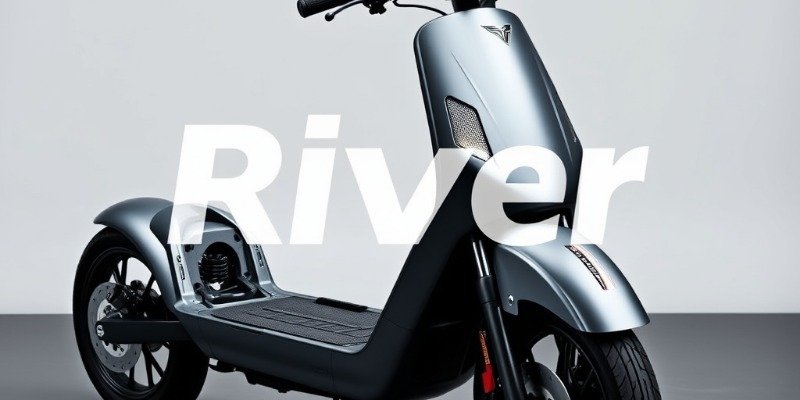
River has built a reputation for practical electric scooters with the Indie. The Bengaluru-based startup recently opened its factory doors for a detailed production walkthrough, and the video reveals a clear strategy. The same steel tubular dual-cradle frame and dual-sided aluminium swingarm that underpin the Gen 3 Indie will also support the upcoming Yamaha EC06 and any future River models. This article explains why that decision matters for buyers, for manufacturing, and for the segment.
The Gen 3 Chassis Is A Proven Baseline
The third-generation Indie received a redesigned chassis that shed nearly 7 kilograms and added 9 millimetres of ground clearance, bringing it to 177 millimetres. The frame remains a steel tubular dual-cradle unit, while the swingarm stays a dual-sided aluminium alloy piece. These changes improved real-world usability without altering the scooter's fundamental architecture. The Red Dot award for both concept and production versions confirms the design's strength.
One Line, Multiple Models
The factory tour shows two parallel assembly lines fed by a central component line. Crucially, the presenter notes that the Yamaha EC06 will be assembled on the very same line. The tooling and processes are flexible enough to switch between the Indie and the Yamaha with minimal changeover. This is possible because both scooters share the core chassis, swingarm, and motor mounting points. For River, it means higher asset utilisation. For Yamaha, it means a faster route to market without investing in a dedicated line.
Sub-Assembly Efficiency
The motor and swingarm are mated off-line as a sub-assembly. The mid-drive permanent magnet synchronous motor comes from Mallay, and the chain drive is integrated at this stage. This module is then lifted by overhead cranes and bolted to the main frame. Keeping this sequence identical across models reduces parts count, simplifies quality checks, and shortens training time for line workers. The factory currently targets 200 units per shift with a peak capacity of 8,000 units per month.
Battery Integration Is Built In
The chassis was designed from the start to accept a 4 kWh battery pack in its floor. The pack sits between the frame rails, and the chassis bolts on top of it. This structural approach lowers the centre of gravity and frees up the underseat area for 43 litres of storage plus a 12-litre glovebox. Any future derivative that uses the same battery format can slot into the same cavity without re-engineering the frame.
Suspension Geometry Carries Over
The front uses twin telescopic forks with hydraulic dampers, while the rear relies on twin coil-spring shock absorbers with preload adjustment. Both mount to the same chassis and swingarm hardpoints. Reviewers have praised the rear suspension but noted the front feels under-damped on broken roads. Because the geometry is fixed, any tuning changes — revised fork internals, updated shock valving — can be applied across the platform without new tooling.
Practicality Remains A Selling Point
The Indie's flat floorboard, front foot-pegs, and wide rider triangle are direct outcomes of the chassis layout. The grab rail and pannier stays are welded or bracketed to the frame. These features have made the Indie popular with gig workers and families alike. Retaining the platform ensures that future models inherit the same load-carrying versatility without starting from a blank sheet.
Cost And Time To Market
Developing a new chassis from scratch takes 18 to 24 months and significant capital. By amortising the Gen 3 architecture across at least two brands and multiple variants, River spreads the fixed cost over higher volumes. This also accelerates the launch timeline for the Yamaha EC06 and any River follow-ups. The company has hinted at a new factory by 2027, but the current line already supports the planned mix.
What This Means For Buyers
Customers can expect future River scooters — and the Yamaha EC06 — to feel familiar in terms of ergonomics, storage, and ground clearance. Service networks will benefit from common parts such as swingarm bearings, chain adjusters, and brake caliper mounts. The platform approach also makes it easier for River to offer accessories like top boxes and panniers that fit across the range.
River's decision to lock in the Indie's chassis and swingarm for its next wave of products is a textbook example of platform strategy done right. It leverages proven engineering, maximises factory flexibility, and keeps the practicality that made the Indie stand out. For the Indian electric scooter market, it signals a shift from one-off launches to scalable, modular vehicle families.
FAQs
Will the Yamaha EC06 be mechanically identical to the River Indie?
The EC06 will share the same steel dual-cradle frame, aluminium swingarm, motor mounting, and battery integration. Styling, body panels, instrument cluster, and calibration will differ to suit Yamaha's brand positioning.
Does the shared chassis limit what future River scooters can offer?
The platform fixes wheelbase, battery size, and suspension mounting points. Within those constraints, River can vary motor tune, battery capacity, features, and bodywork. The factory line is designed to handle this mix without major retooling.
Is the swingarm design unique to River?
The dual-sided aluminium swingarm with chain drive is a known architecture in the scooter segment. River's version is engineered for the mid-drive motor and the specific chassis geometry. Sharing it with the EC06 confirms its suitability for higher volumes.
Will the front suspension criticism be addressed on the new models?
Because the front fork mounts are part of the shared chassis, any revision to damping or spring rate can be applied across all models on the line. River has not announced a specific fix, but the platform allows it without structural changes.
How does this affect service and spare parts availability?
Common chassis and swingarm components mean dealers stock fewer unique parts. Bearings, bushes, chain adjusters, and brake mounts will be interchangeable across the Indie, EC06, and future derivatives, improving fill rates and reducing wait times.