
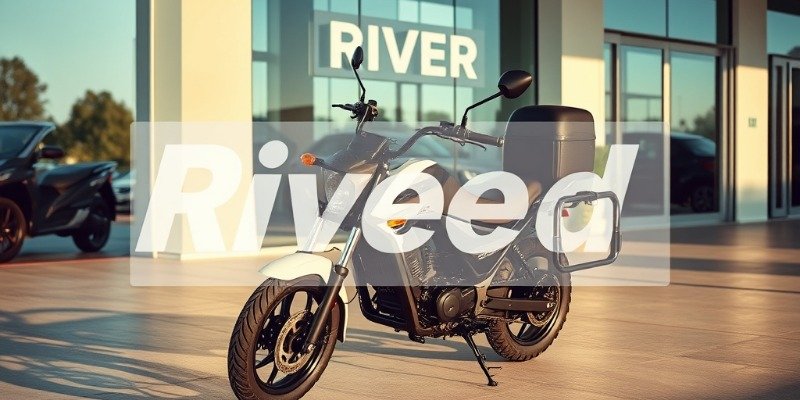
Bengaluru-based electric vehicle startup River Mobility has secured $120 million in a Series C funding round, marking one of the largest capital raises in India's electric two-wheeler space this year. The round was led by Indian investment firms Elev8 Venture Partners and Claypond Capital, with participation from a mix of domestic financial institutions and strategic global investors including Yamaha Motor, Al-Futtaim Group, and Mitsui. This fresh capital brings River's total fundraising to $144 million since its inception in 2021.
The funding arrives at a pivotal moment for the company, which has built its entire business around a single product — the Indie electric moped — since its launch in 2023. Unlike most rivals that pursue multiple models across price segments, River chose a utility-first approach, targeting self-employed customers aged 28 to 35 with a vehicle priced at ₹155,000 ex-showroom. The strategy has yielded 3% market share in the electric two-wheeler category as of July 2026, achieved with just one product and 75 stores across 45 cities.
Manufacturing Scale-Up and New Facility Plans
River's immediate priority is solving its capacity constraint. The company's existing factory on the outskirts of Bengaluru currently produces 10,000 vehicles per month and operates at 60% utilization. CEO Aravind Mani revealed that monthly output has climbed from 20 vehicles per day in the early days to 300 vehicles per day today, calling it "the steepest learning curve for any company out there." With sales running at 5,000 to 6,000 units monthly, the plant will hit full capacity by early 2027.
To break this ceiling, River will allocate roughly 40% of the Series C proceeds toward research and development and a new greenfield manufacturing facility. Construction is expected to begin within two months, with the first phase commissioned by mid-2027. The new plant targets an annual capacity of 700,000 to 800,000 units — roughly 80,000 per month — which would support the company's goal of reaching 25,000 monthly sales by March 2028.
Retail Expansion and Profitability Roadmap
The remaining 60% of the capital will fund operating expenditure over the next 18 to 24 months, primarily for retail network expansion. River currently operates 75 stores and aims to grow this to over 200 by March 2027 and 350-plus by March 2028. Mani emphasized that the dealership-driven model keeps capital expenditure light for the company, as store and service center investments come from dealer partners. He noted that all 75 existing stores are individually profitable.
On the financial front, River's revenue more than quadrupled in fiscal 2026 compared to the previous year's ₹1 billion (approximately $10.5 million), with monthly revenue now touching ₹1 billion ($11 million). Gross margins are approaching double digits and expected to improve with scale. The company projects EBITDA profitability once monthly production reaches 20,000 to 25,000 units, a milestone targeted for 2028-29.
Product Portfolio Expansion
The capacity unlock from the new factory will enable River's long-awaited multi-model strategy. A second premium utility electric scooter is slated for launch by mid-2027, positioned in a similar price band as the Indie. A third model is under development. However, Mani clarified that River will not enter the mass-market segment (around ₹1.2 lakh) until its retail footprint reaches approximately 500 outlets nationwide.
This disciplined product rollout contrasts with competitors like Ather Energy, Ola Electric, TVS Motor, and Bajaj Auto, which operate with multiple models and hundreds of outlets. For context, Ather had sold over 200,000 units cumulatively by July 2026, while TVS and Bajaj each exceeded 260,000 units. River's 27,533 cumulative Indie registrations (per Vahan data) and 50,000-plus total sales reflect a different playbook — deep penetration with one differentiated product before broadening the portfolio.
Investor Confidence and Market Context
The investor syndicate signals strong conviction in River's execution capability. Navin Honagudi of Elev8 Venture Partners described India's electric two-wheeler market as entering a "defining growth phase" driven by consumer adoption and improving economics. Sekhar Garisa of Claypond Capital highlighted River's "disciplined execution and product differentiation" in a crowded market. Yamaha Motor's Hajime Jim Aota pointed to River's vertically integrated EV technology platform as central to its success.
The round comprised over 85% equity with the remainder as venture debt, and notably included no secondary share sales — indicating founder and early investor confidence in the growth trajectory. The funding also reflects a shift in investor appetite from backing early-stage technology bets to scaling proven business models with demonstrated unit economics.
Competitive Landscape and Outlook
India's electric two-wheeler market has become the primary driver of EV adoption in the country, fueled by rising fuel prices and policy support. River's utility-first positioning, combined with a capital-efficient dealership model and vertical integration, offers a distinct template among EV startups. The company expects annual sales to more than double or potentially triple from the 28,000 units sold in 2025.
The road ahead hinges on flawless execution of the new factory commissioning, timely launch of the second model, and sustaining retail expansion without diluting store-level economics. If River achieves its 25,000-unit monthly run rate by March 2028, it would represent a 4x scale-up from current levels and validate the single-model-to-portfolio transition that few Indian EV startups have navigated successfully.
River Mobility's journey from a one-product startup to a funded portfolio aspirant encapsulates the evolving dynamics of India's EV ecosystem — where manufacturing depth, retail discipline, and product focus are emerging as differentiators alongside capital access. The next 24 months will test whether this playbook can deliver sustained profitability and market share growth in a segment increasingly dominated by well-capitalized incumbents.
FAQs
How much funding has River Mobility raised in total?
River Mobility has raised a total of $144 million across all funding rounds, with the latest Series C contributing $120 million.
What is River's current monthly production and sales volume?
River currently produces around 300 vehicles per day (approximately 9,000 per month) and sells 5,000 to 6,000 units monthly through 75 stores.
When will River launch its second electric scooter model?
The second premium utility electric scooter is scheduled for launch by mid-2027, once the new manufacturing facility begins operations.
What is River's target for retail store expansion?
River plans to expand from 75 stores today to over 200 by March 2027 and 350-plus by March 2028, with a long-term goal of 500 outlets before entering the mass-market segment.
When does River expect to become profitable?
River projects EBITDA profitability once monthly production reaches 20,000 to 25,000 units, which the company aims to achieve by 2028-29.