
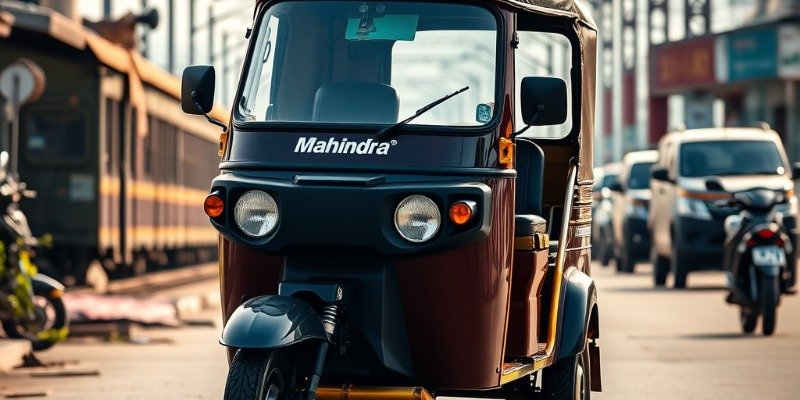
India's streets are changing fast. Every 90 seconds a new electric three-wheeler rolls off a factory production line. In September more than one in two new three-wheelers sold in the country was electric. That figure stands far ahead of electric cars at 8.5 percent and electric two-wheelers at 11.6 percent. India has become the world's largest market for battery-powered auto rickshaws.
The shift did not happen overnight. More than a decade ago e-rickshaws first appeared on Delhi roads. They were often built in roadside workshops using Chinese batteries fitted to modified pedal tricycles. Today the sector has grown into a structured industry. Manufacturers like Mahindra Last Mile Mobility are scaling up production to meet rising demand. The company's chief executive Suman Mishra said their EV penetration has grown six times in the last five years. Government subsidies better vehicle quality and falling running costs have sped up adoption over the past two years.
The economics that drive the switch
For drivers the decision comes down to money. Afroz Alam a 31-year-old driver in Hyderabad switched from a gas-powered model to an electric one this year. He said the cost of charging saves him several hundred rupees every day. That daily saving helps him repay the loan he took to buy the more expensive electric vehicle. As he put it the higher upfront price levels out once you stop paying for petrol or CNG.
Analysts agree that economics is the main driver. The Council on Energy Environment and Water estimated in 2025 that petrol three-wheelers cost more than twice as much per kilometre to operate over their lifetime compared to electric models. Bidisha Bhattacharya of the Chintan Research Foundation in Delhi noted that rickshaws run continuously through the day so fuel savings add up quickly.
Changing the look and sound of cities
Across northern India electric rickshaws now queue outside railway stations and busy markets. They have replaced the thumping noise of traditional tuk-tuks with a quieter hum. Mahindra is one of 15 finalists for the Earthshot Prize to be awarded in Mumbai by Prince William on November 17. While the environmental benefits are real most drivers care more about their earnings.
The trend also helps policymakers. India imports most of its oil and natural gas. Managing energy costs has become urgent since conflict in the Middle East erupted in February. Climate think-tank Ember said India already consumes less transport fuel per capita than China did at a similar income level in 2012. Cheap solar power and falling battery costs have helped. In the race to curb oil imports India is already far ahead.
Hurdles that remain
Adoption is not even across the country. E-rickshaws are common in cities like Lucknow but far less visible in Mumbai. Limited parking and charging infrastructure make ownership difficult there. Mishra explained that in Mumbai there is no parking at all. You can park a fuel vehicle on the roadside but an EV needs a charging point.
Supply chains pose another challenge. Last year China restricted exports of rare-earth magnets which are essential for electric motors. Several Indian automakers had to cut or suspend production. New Delhi is now promoting domestic manufacturing including battery cells. Most cells are still imported from China and South Korea. Mishra said two players are close to commercialising cells in India but patience is needed.
The road ahead
The bigger question is whether this success can move to private cars and eventually trucks which consume far more fuel. Bhattacharya believes commercial fleets could provide the next breakthrough. When taxis go electric they will help build charging networks and consumer confidence.
For drivers who have already made the switch the argument is simple. Mohammad Ali a 26-year-old who bought an e-rickshaw this year said people keep saying the battery will fail. He challenges them to take the vehicle for a day and see how much money they save.
The transformation of India's three-wheeler fleet shows how quickly economic logic can drive mass adoption of electric mobility. With every electric rickshaw that replaces a petrol or CNG model the daily savings for drivers add up and the country's oil import bill shrinks a little more.
FAQs
How much can an auto rickshaw driver save daily by switching to electric?
Drivers report saving several hundred rupees each day on charging costs compared to what they spent on petrol or CNG. The exact amount depends on daily distance covered and local electricity rates.
What share of new three-wheeler sales in India are now electric?
In September more than half of all new three-wheelers sold in India were electric. This makes the three-wheeler segment the fastest electrifying vehicle category in the country.
Why are electric auto rickshaws more common in some cities than others?
Cities like Lucknow have seen high adoption while Mumbai lags due to limited parking space and a lack of charging infrastructure. Without dedicated parking it is difficult for drivers to charge their vehicles overnight.
What are the main challenges for the electric three-wheeler industry?
Key challenges include uneven charging infrastructure across cities and dependence on imported battery cells and rare-earth magnets. China's export restrictions on magnets last year disrupted production for several Indian manufacturers.
Can the success of electric auto rickshaws be repeated in cars and trucks?
Experts believe commercial fleets such as taxis may be the next segment to electrify at scale. Fleet electrification would help build charging networks and boost consumer confidence for wider EV adoption.