
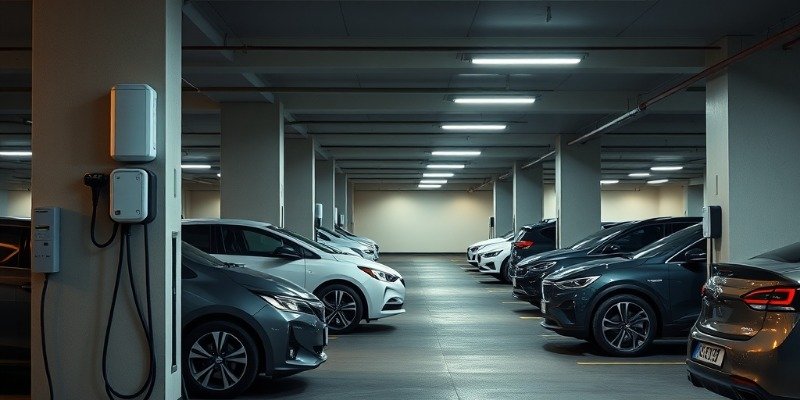
Electric vehicle adoption in India is growing fast, with over 1.76 lakh electric cars sold in 2025 alone. As more people switch to EVs, the need for home charging is rising. But for apartment dwellers, things get complicated. Many Resident Welfare Associations (RWAs) block EV charger installations over concerns like fire safety, power overload, or lack of policy. The big question is: can they legally do this? The short answer is no. Indian law now clearly supports EV charging in residential complexes. This guide explains your legal rights, how to get RWA approval, what rules apply, and smart tips to install a charger safely.
Your Legal Rights to Install an EV Charger
Indian law increasingly backs EV charger installation in homes and apartments. The Ministry of Housing and Urban Affairs (MoHUA) updated the Model Building Bye-Laws to require new buildings to reserve 20% of parking spaces for EV-ready infrastructure. A landmark ruling from the Bombay High Court said housing societies cannot deny permission for charger installation just because there is no existing policy in place. As long as safety norms are met, RWAs must approve the request. In Maharashtra, the cooperative housing circular requires societies to issue a No Objection Certificate (NOC) within 7 days of a valid application.
Other states have followed. Delhi offers one of the lowest residential charging tariffs at ₹4.5 per kWh. Karnataka mandates 10% EV-ready parking in new residential buildings and allows flat owners to install chargers within existing sanctioned loads. State policies also support EV-ready building codes and Right to Charge principles nationwide. If your RWA says no without valid reasons, you can push back with official rules and court precedents.
Step-by-Step Process for RWA Approval
Getting approval from your RWA is the first and most critical step. Start by submitting a written application to your management committee requesting permission to install a charger in your assigned parking spot. Attach clear technical specifications including the charger type, whether AC 3.3kW or 7.4kW, its electrical load needs, and safety certifications such as BIS or ARAI approval. You should also propose a metering plan, ideally an individual sub-meter for your unit, so billing is tracked separately. Follow up by asking the RWA to pass an AGM or committee resolution approving dedicated or shared charging points. Once approved, apply with your local DISCOM if you need an increase in sanctioned load, usually required for chargers above 3.3kW. Finally, hire a licensed electrician for safe installation using proper earthing, MCB protection, and fire safety measures.
Costs Involved in Installing an EV Charger
Installation costs vary depending on the charger type and site complexity. An AC charger rated at 3.6kW typically costs between ₹15,000 and ₹20,000. A 7.5kW smart charger ranges from ₹30,000 to ₹35,000. Electrical wiring and earthing may cost between ₹3,000 and ₹4,000, while sub-meter installation adds another ₹2,000 to ₹5,000. DISCOM load enhancement is typically budgeted between ₹1,000 and ₹5,000. Overall, expect to pay between ₹26,000 and ₹50,000. On average, charging at home costs ₹5 to ₹8 per kWh, much cheaper than public fast chargers at ₹18 to ₹25 per kWh.
Choosing Between Individual and Shared Chargers
Two main models exist. Individual chargers are installed at your own parking spot with a personal sub-meter, ideal for daily users who want guaranteed access. The cost is entirely yours. Shared charging hubs are common-area stations managed through apps that handle booking and billing. This setup works well for societies with 5 to 10% EV adoption, where pooling resources lowers the cost per user. Some providers offer complete turnkey solutions for shared complexes.
Managing Electrical Load Safely
Housing societies worry about electrical overload. Smart solutions help prevent this. Load balancing distributes power across multiple EVs automatically. Scheduled charging programs the units to run during off-peak hours, usually between 11 PM and 6 AM. Static and dynamic load management adjusts charging speeds based on available power. Starting small with 3 to 5 chargers and scaling later reduces immediate strain on transformers and panels.
Common RWA Objections Explained
RWAs raise several objections. They say EV chargers pose a fire hazard. Certified units include multiple safety protections and EV fires are statistically rarer than petrol fires. They claim the building does not have enough power. A 3.3kW AC charger uses the same load as a geyser or air conditioner, and smart load management avoids overload. They argue there is no existing policy. The Bombay High Court ruled that lack of policy is not valid grounds for denial, and MoHUA guidelines apply nationwide. They fear other residents will complain. Individual chargers on your spot with a private meter do not affect anyone else’s electricity bill.
Future-Proofing Your Housing Society
Going EV-ready now brings long-term gains. Nearly 24% of housing societies plan to implement charging infrastructure in the next six months. Early adopters benefit from lower costs, better parking spot choices, and higher property values. Industry data shows EV-ready societies command a 3 to 5% premium in valuations. Whether you are an individual owner or part of the RWA committee, the right time to act is now. India’s regulatory framework, court rulings, and subsidies all favor residential EV charging.
Key Takeaways for Apartment EV Owners
Indian law supports your right to install an EV charger. RWAs cannot refuse permission arbitrarily. Maharashtra mandates NOC issuance within seven days. Proper documentation, certified chargers, and licensed electricians ensure compliance. Smart metering and load balancing prevent disputes and overloads. Subsidized tariffs in states like Delhi and Karnataka lower running costs. Communities that plan ahead attract residents and increase property values. Always keep approvals in writing and cite national building bylaws when needed.
FAQs
Can my RWA legally refuse permission to install an EV charger?
No. Under the Ministry of Power’s consolidated guidelines and rulings such as the Bombay High Court directive, RWAs cannot issue blanket bans if safety and structural norms are met. Arbitrary denial is not allowed.
What permissions are required to install a home EV charger?
You generally need three things: RWA sign-off if you live in a society, a heads-up to your DISCOM about the added load, and compliance with CEA and BIS safety standards. No separate electricity license is required to charge your own vehicle.
What electrical load do I need for a home charger?
Most homes use single-phase 230V, supporting up to 7.4kW. Homes with three-phase connections can handle 11kW or 22kW chargers. Always check your sanctioned load on your electricity bill and consider a dedicated circuit and separate meter.
Can I install an EV charger in common parking areas?
Yes, if the RWA approves it. Fire safety rules permit private chargers on all open parking floors, including basements and podiums. Shared charging hubs in common areas work best for societies with growing EV adoption.
What common mistakes should I avoid during installation?
Avoid cheap uncertified chargers, skipping RCD and surge protection, ignoring electrical load limits, running cables unsafely, or installing only for your current EV. Always hire licensed professionals and obtain a commissioning certificate.