
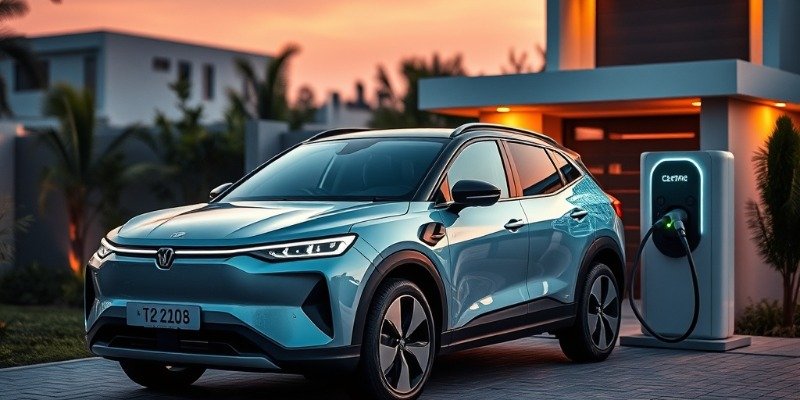
The electric vehicle market is changing fast. By 2027, buyers in India will have many new models to choose from, with better range, faster charging, and new battery technology. This checklist will help you understand what to look for before you buy your next EV.
Understanding Your Driving Needs
Before looking at any model, think about how you drive every day. If you mostly drive short distances in the city, a smaller battery with 200 to 250 kilometres of range may be enough. If you have a long daily commute or take frequent highway trips, you should look for models offering 400 kilometres or more. Remember that highway speeds, cold weather, air conditioning, and carrying heavy loads can reduce real-world range.
Consider where you will charge. Home charging is the most convenient and cheapest option. If you have a dedicated parking spot, you can install a Level 2 charger that adds 20 to 40 kilometres of range per hour. If you live in an apartment without charging access, check the distance to the nearest public fast charger. Public DC fast chargers can add 100 to 160 kilometres in 20 to 30 minutes, but relying on them daily can be less convenient and more expensive.
Charging Speed and Battery Architecture
Charging speed is now a major differentiator between models. Many 2027 EVs use 800-volt architecture, which allows much faster charging than older 400-volt systems. For example, the BMW iX3 and iX4 can charge at up to 400 kW, going from 10 to 80 percent in about 21 minutes. The Mercedes-Benz Electric C-Class can add 320 kilometres in 10 minutes at a compatible DC fast charger. The Volvo EX60 can add 278 kilometres in 10 minutes at a 400 kW charger.
Not all models offer this speed. The Kia EV3 uses a 400-volt system and takes about 30 minutes to charge from 10 to 80 percent. The Mitsubishi Eclipse Sportback has a maximum fast-charging speed of 150 kW, adding about 136 kilometres in 10 minutes. When comparing models, look at both the peak charging rate and the charging curve. A car that holds high speed for longer will spend less time plugged in on road trips.
Also check the charging port type. Most new models for 2027 come with the North American Charging Standard (NACS) port, which gives access to the Tesla Supercharger network. Some still offer CCS ports, and adapters are available. Make sure the car you choose matches the charging infrastructure in your area.
Battery Technology and Range
Battery chemistry is improving. Many 2027 models use higher energy density cells that pack more range into the same space. The BMW iX3 offers up to 698 kilometres of estimated range. The Lucid Air Grand Touring leads with 824 kilometres. More affordable options like the Chevrolet Equinox EV and Kia EV3 Wind offer around 513 and 516 kilometres respectively.
Look at the battery warranty. Most manufacturers offer 8 years or 160,000 kilometres with a minimum 70 percent capacity guarantee. This warranty transfers to subsequent owners, which supports resale value. Some brands like Hyundai offer longer coverage. When buying used, always ask for a State of Health (SOH) report. A battery below 85 percent capacity can significantly reduce value and usable range.
Solid-state batteries are expected to arrive around 2027 to 2028, promising even greater range and faster charging. Toyota has targeted commercialization in this window. If you plan to keep your car for many years, this technology shift may affect long-term value.
Resale Value Predictions
EVs currently depreciate faster than petrol or diesel cars in the first three years. Industry data shows the average EV retains about 38 percent of its value after three years, compared to 50 to 60 percent for petrol and diesel models. However, the gap is narrowing as the market matures.
Several factors influence resale value. Models with strong brand reputation, longer real-world range, and fast charging hold value better. The Mercedes-Benz G580 EQ, Mini Cooper Electric, Renault Scenic E-Tech, Porsche Macan Electric, and Volvo EX90 are among the best at retaining over 54 percent after three years. Models with shorter range, older technology, or limited service networks depreciate faster. The GWM Ora 03, Nissan Leaf, and Jaguar I-Pace have retained only 25 to 28 percent.
Buying a used EV that is one to five years old lets you avoid the steepest depreciation. Look for models with transferable battery warranty, good service history, and an SOH report above 85 percent. As the 2030 petrol and diesel ban approaches in many markets, demand for used EVs is expected to grow, which may improve resale values across the board.
Total Cost of Ownership
While EVs have higher upfront prices, they can be cheaper to run. Electricity costs less per kilometre than petrol or diesel, especially if you charge at home during off-peak hours. Maintenance is lower because there are fewer moving parts — no oil changes, transmission fluid, or spark plugs. Many governments offer tax credits, rebates, or registration discounts that reduce the purchase price.
Factor in insurance costs, which can be higher for some EVs. Also budget for a home charger installation if you don't have one. A Level 2 charger typically costs ₹50,000 to ₹1,50,000 installed in India, depending on wiring and permits.
Choosing the Right Model for 2027
The 2027 lineup covers every segment. For affordable compact SUVs, the Chevrolet Equinox EV, Kia EV3, and Subaru Uncharted start around ₹29 to ₹35 lakh equivalent with 300+ kilometre range. The Tesla Model 3 and Model Y remain strong value propositions with 400+ kilometre range and Supercharger access.
In the premium segment, the BMW iX3 and iX4 offer 800-volt charging and 600+ kilometre range. The Mercedes-Benz Electric C-Class and GLC EQ bring 800-volt architecture and advanced software. The Volvo EX60 adds safety innovations like adaptive seat belts. For three-row families, the Kia EV9, Hyundai Ioniq 9, and Subaru Getaway offer seven seats with 300 to 450 kilometre range.
Pickup buyers can consider the Ford Fathom, Chevrolet Silverado EV, and Ram 1500 REV. The Slate Truck offers a minimalist, low-cost option starting near ₹21 lakh equivalent.
Final Verdict
The 2027 EV market gives Indian buyers more choice than ever before. Focus on your real daily driving needs, not the longest range number. Prioritise 800-volt charging if you take regular road trips. Check battery warranty transferability and get an SOH report for any used purchase. Stick to proven brands with strong service networks to protect resale value. Home charging remains the single biggest factor in making EV ownership convenient and affordable. With the right model and charging setup, an EV bought in 2027 can serve you well for a decade or more.
FAQs
What is the minimum range I should look for in a 2027 EV
For city driving with home charging, 250 to 300 kilometres of real-world range is sufficient. For highway trips or limited charging access, target 400 kilometres or more. Remember that cold weather and high speeds can reduce rated range by 20 to 30 percent.
How fast can 2027 EVs charge at public stations
Models with 800-volt architecture like the BMW iX3, Mercedes-Benz Electric C-Class, and Volvo EX60 can add 250 to 320 kilometres in 10 minutes at compatible 350 to 400 kW DC fast chargers. 400-volt models typically take 20 to 30 minutes for a similar charge.
Will an EV bought in 2027 hold its value better than current models
Yes, as the market matures and charging infrastructure improves, depreciation rates are expected to narrow with petrol cars. Models with 800-volt charging, long range, transferable battery warranty, and strong brand reputation will retain value best.
Do I need a home charger to own an EV in 2027
Home charging is highly recommended. It is cheaper, more convenient, and better for battery health than relying on public fast chargers. A Level 2 charger adds 20 to 40 kilometres per hour and can fully charge most EVs overnight.
What battery warranty should I expect on a 2027 EV
Most manufacturers offer 8 years or 160,000 kilometres with a minimum 70 percent capacity guarantee. This warranty usually transfers to subsequent owners. Always verify the exact terms for your chosen model and market.