
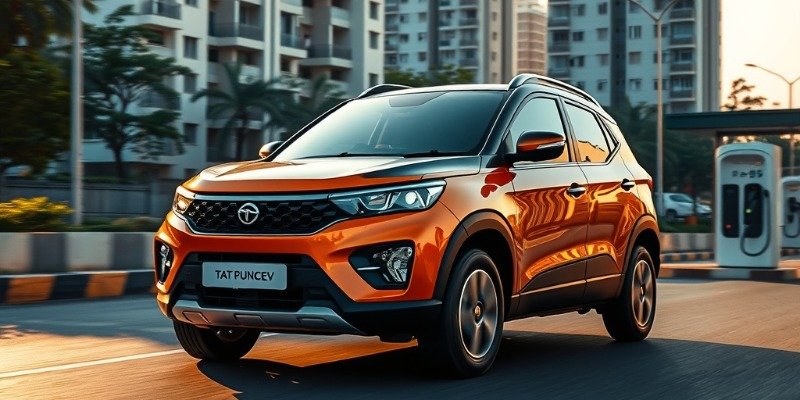
The Tata Punch EV has created a new benchmark in India's electric vehicle journey. In October 2026, it became the first standalone electric passenger car in the country to cross 5,000 monthly wholesale dispatches. This milestone marks a significant moment for mass-market electric mobility in India, where affordability and practicality have long been key barriers to adoption.
The achievement comes at a time when competition in the electric SUV space is heating up. Mahindra's XEV 9S has emerged as a strong rival, briefly overtaking the Punch EV in August 2026 with 4,508 units against Tata's 4,430. However, Tata regained the lead in September with 4,702 units versus Mahindra's 4,636, before setting the new monthly record in October. The Punch EV has now been the best-selling electric car in India for three of the last four months.
What Is Driving the Punch EV's Strong Performance
Several factors explain why the Punch EV is finding favor with Indian buyers. The pricing sits in an accessible range, with ex-showroom prices between ₹9.79 lakh and ₹12.99 lakh following the September 2026 revision. Tata also offers a Battery-as-a-Service option that lowers the upfront cost, though buyers should evaluate the complete ownership expense before deciding.
The model comes with two battery choices to suit different needs. The 30 kWh pack delivers an ARAI-certified range of 365 km with 88 bhp and 154 Nm of torque, backed by an 8-year or 1.6 lakh km warranty. The larger 40 kWh pack offers 468 km of range, 129 bhp, and the same torque, with a 15-year unlimited kilometre warranty. Both variants share the same compact SUV footprint that works well in cities while offering the elevated seating position many Indian customers prefer.
Features are generous for the segment. Depending on the variant, the Punch EV includes a 360-degree camera, blind-spot monitoring, ventilated front seats, a digital instrument cluster, touchscreen infotainment with wireless Android Auto and Apple CarPlay, a voice-assisted electric sunroof, six airbags, and electronic stability control. A five-star Bharat NCAP safety rating adds further appeal for family buyers.
Tata's Broader EV Growth Story
The Punch EV's milestone is part of a larger surge for Tata Motors' electric portfolio. The company reported 16,244 electric passenger vehicle sales in October 2026, a 74.9 percent increase over the 9,286 units sold in October 2025. Electric vehicles now account for approximately 21.5 percent of Tata's total passenger vehicle sales, up from 15.2 percent a year earlier. This shows EVs are becoming a core part of Tata's business rather than a niche segment.
Tata has also acknowledged that demand for both its EV and CNG models currently exceeds supply, making production scaling a priority for future growth.
What This Milestone Means for India's EV Market
Crossing 5,000 monthly dispatches for a single electric model demonstrates that affordable electric SUVs can achieve meaningful scale in India's price-sensitive market. It signals three important shifts. First, affordable electric SUVs are gaining real traction among first-time EV buyers. Second, the competitive landscape is changing rapidly, with rivals like Mahindra capable of challenging Tata's individual models on monthly volumes. Third, sustained monthly volumes above 5,000 units will be the true test of whether this represents lasting demand or a festive-season spike.
It is important to note that the 5,000-unit figure represents wholesale dispatches from the factory, not retail registrations to end customers. The distinction matters when assessing actual market demand.
Challenges Ahead
Despite the milestone, challenges remain. Intensifying competition could pressure pricing and equipment levels. Charging infrastructure availability, real-world range performance, service experience, and long-term battery durability will continue to influence purchase decisions. Supply constraints also need to be addressed to convert interest into deliveries consistently.
The coming months will reveal whether the Punch EV can sustain this pace and establish a new benchmark for mass-market electric cars in India, or whether October 2026 proves to be a peak driven by seasonal factors.
FAQs
What milestone did the Tata Punch EV achieve in October 2026
The Tata Punch EV became the first standalone electric passenger car in India to cross 5,000 monthly wholesale dispatches in October 2026.
How does the Punch EV compare with the Mahindra XEV 9S in recent months
In August 2026, the Mahindra XEV 9S sold 4,508 units against the Punch EV's 4,430. In September, the Punch EV retook the lead with 4,702 units versus 4,636 for the XEV 9S. The Punch EV then crossed 5,000 units in October.
What are the two battery options available on the Punch EV
The Punch EV offers a 30 kWh battery with 365 km ARAI range, 88 bhp, and an 8-year or 1.6 lakh km warranty, and a 40 kWh battery with 468 km range, 129 bhp, and a 15-year unlimited kilometre warranty.
What is the price range of the Tata Punch EV
The ex-showroom price ranges from ₹9.79 lakh to ₹12.99 lakh after the September 2026 revision.
Does the 5,000-unit figure represent retail sales to customers
No, the milestone reflects wholesale dispatches from the manufacturer to dealerships, not necessarily vehicles delivered to end customers during the month.