
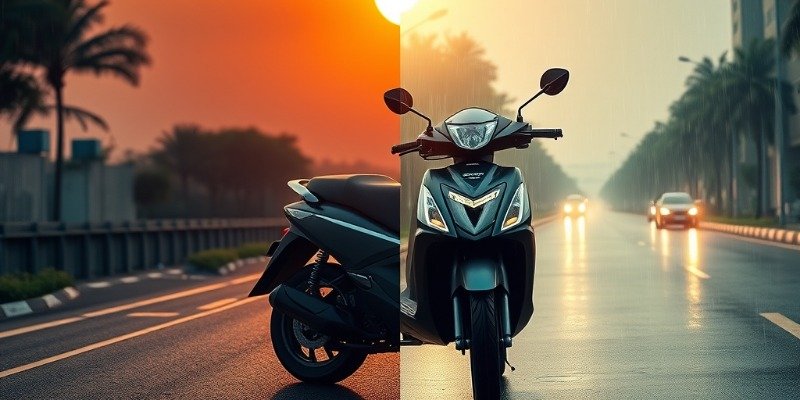
Electric scooters have become a common sight on Indian roads. They are economical, quiet, and produce zero tailpipe emissions. But many riders notice that the distance they can cover on a full charge changes with the season. The range shown in the brochure is usually measured under ideal lab conditions. In the real world, ambient temperature plays a big role in how far you can go and how fast the battery charges. Understanding these changes helps you plan trips better and keep the battery healthy for a longer time.
Why temperature matters for lithium-ion batteries
Every modern e-scooter uses a lithium-ion battery pack. These batteries rely on chemical reactions to store and release energy. Temperature directly affects the speed of those reactions. When it is very hot, the reactions happen faster but the battery ages quicker. When it is cold, the reactions slow down and the battery cannot deliver its full capacity. The battery management system (BMS) monitors temperature and may limit power or charging speed to protect the cells. This is why you see different range figures in summer, winter, and the monsoon season.
Summer heat and its impact on range
Indian summers can push ambient temperatures above 40 degrees Celsius. During such conditions, the battery pack heats up quickly, especially if the scooter is parked in direct sunlight or ridden continuously at high speed. A hot battery shows a temporary drop in usable range because the BMS reduces power output to prevent overheating. You may also notice slower charging because the charger tapers current when the pack temperature crosses a safe threshold. Over time, repeated exposure to high heat accelerates chemical degradation, which permanently lowers the total capacity of the battery. Tyre pressure also rises in the heat, which can reduce grip and increase rolling resistance if not corrected.
Cold weather and the range drop
In colder regions or during winter mornings, the opposite happens. The electrolyte inside the cells becomes more viscous, increasing internal resistance. This means the battery delivers less energy for the same state of charge. Tests on electric vehicles show range losses between 10 and 30 percent at near-freezing temperatures. For e-scooters, the drop can be similar. Acceleration feels slower, top speed may be limited, and charging takes longer because the BMS waits for the pack to warm up before accepting full current. The loss is temporary and range returns when the temperature rises, but planning for the reduced distance is essential for daily commutes.
Monsoon humidity and wet roads
Monsoon brings high humidity and frequent rain. While moisture does not change battery chemistry directly, it affects safety and efficiency. Wet roads reduce tyre traction and increase braking distance. Puddles can hide potholes, leading to sudden impacts that stress the battery mount and electronics. Most e-scooters carry an IP rating for water resistance, but that rating covers splashes and light rain, not immersion or high-pressure washing. Water ingress into connectors or the controller can cause corrosion over time. After a wet ride, it is good practice to dry the scooter thoroughly, especially around the charging port and display, before plugging in the charger.
Charging speed in different temperatures
Charging speed is not constant. In summer, if you plug in immediately after a long ride, the battery may already be hot. The BMS will limit the charging current to keep temperatures safe, resulting in a slower top-up. Waiting 20 to 30 minutes after the ride lets the pack cool naturally and restores faster charging. In winter, a cold battery may not accept full current until it warms up, either through ambient temperature or a gentle ride. Charging in a shaded, ventilated area during summer and in a covered, dry spot during monsoon protects both the charger and the battery. Always use the original charger supplied by the manufacturer; third-party units may lack proper temperature communication with the BMS.
Practical tips for Indian riders
Park your scooter in shade or a covered area whenever possible. Avoid charging under direct sunlight or in a hot enclosed space. Check tyre pressure weekly during summer and adjust to the manufacturer's specification. Ride smoothly — sudden acceleration and hard braking generate extra heat in the battery and motor. Use eco or normal mode for daily commuting; reserve sport mode for short bursts. Keep the battery ventilation areas clean from dust and mud, which can trap heat. During monsoon, wipe down the scooter after every ride and ensure the charging port is dry before connecting the plug. If you store the scooter for weeks, keep the battery between 40 and 60 percent charge in a dry indoor spot.
FAQs
Does summer heat permanently damage the e-scooter battery?
Continuous exposure to high temperatures accelerates chemical aging, which reduces total capacity over time. Occasional hot days do not cause immediate damage, but parking in shade and avoiding charging a hot battery helps preserve long-term health.
Why does my e-scooter show less range on cold mornings?
Cold temperatures increase internal resistance in the battery cells, so less energy is available until the pack warms up. The range loss is temporary and returns when the temperature rises.
Can I charge my e-scooter immediately after a rainy ride?
Only if the charging port and connector are completely dry. Moisture inside the port can cause a short circuit or corrosion. Wipe the area dry and let it air for a few minutes before plugging in.
Does riding in eco mode really extend range in extreme temperatures?
Yes. Eco mode limits peak power draw, which reduces heat generation in the battery and motor. This helps maintain usable range in both hot and cold conditions.
Should I keep the battery at 100 percent charge during long storage?
No. Storing a lithium-ion battery at full charge for weeks stresses the cells. The recommended storage level is between 40 and 60 percent in a cool, dry place.