
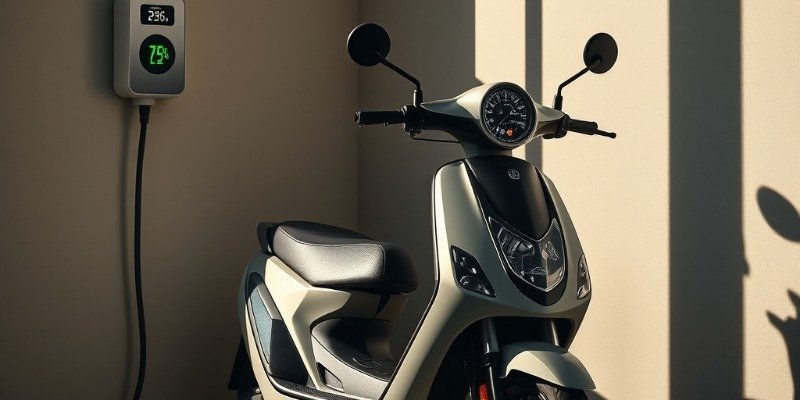
The battery pack is the most expensive component in your electric scooter, often making up 30 to 40 percent of the total vehicle cost. Replacing it can set you back anywhere from Rs 15,000 to Rs 50,000 or more depending on the model. Yet most riders unknowingly shorten battery life through simple daily habits. Research from battery universities and manufacturer guidelines consistently shows that lithium-ion cells degrade fastest at the extremes of charge and temperature. The good news is that small changes in how you charge can double the usable lifespan of your pack, taking it from the typical 300 to 500 cycles to 800 cycles or more. Here are five science-backed habits that protect your investment.
Habit 1: Follow the 20 to 80 Percent Rule for Daily Use
Lithium-ion batteries experience the least chemical stress when operating between 20 percent and 80 percent state of charge. At 100 percent, the cells sit in a high-voltage state that accelerates electrode plating and reduces total cycle life. At the other end, discharging below 20 percent damages the internal structure of the cell. For daily commuting, charge to 80 percent and plug in again when the display shows 20 to 30 percent. Reserve a full 100 percent charge only for those days when you genuinely need the maximum range for a long trip. This partial charging approach can triple the number of usable cycles compared to regular 0 to 100 percent cycling.
Habit 2: Never Charge a Hot Battery — Wait 30 Minutes After Riding
Heat is the single biggest enemy of lithium-ion chemistry. Charging generates its own heat, and if the pack is already warm from a ride, the combined thermal stress can permanently degrade cell capacity. After a high-power ride, especially on performance scooters with large motors, let the scooter rest for at least 30 minutes before connecting the charger. The ideal charging temperature range is 15 to 35 degrees Celsius. Never charge in direct sunlight, inside a hot parked car, or in an unventilated garage during summer. If the battery feels warm to the touch, it is not ready to charge.
Habit 3: Unplug the Moment Charging Completes — Do Not Leave It Overnight
Modern battery management systems do stop current flow at 100 percent, but keeping the pack at full charge for hours maintains high internal stress and trickle heat. Manufacturer guidelines across brands including Teverun, Zwheel, and Eahora all advise unplugging once the charger indicator shows complete. A typical e-scooter charges in 4 to 6 hours. If you plug in when you get home, unplug before bed. Using a smart plug timer that cuts power after a set duration is an easy way to automate this habit. Leaving the scooter connected for days at a time is one of the fastest ways to lose capacity.
Habit 4: Store at 50 to 60 Percent Charge in a Cool, Dry Place
If you will not ride for more than a few weeks — during monsoon, extreme heat, or travel — do not store the battery full or empty. Both extremes cause irreversible capacity loss over time. Charge to 50 to 60 percent, turn the scooter off completely, and keep it indoors at 20 to 25 degrees Celsius. Check the charge every two to three months and top up back to 50 percent if it has dropped below 40 percent. Never store a fully depleted pack; deep self-discharge can push cells below their safe voltage threshold, making the battery unrecoverable even with the original charger.
Habit 5: Use Only the Original Charger and Ride Smoothly to Reduce Current Spikes
Third-party chargers often lack the precise voltage and current calibration that your scooter's battery management system expects. A mismatched charger can overheat the pack, undercharge cells, or create imbalance that the BMS cannot correct. Always use the manufacturer-supplied charger or an approved replacement with identical specifications. On the riding side, aggressive acceleration and hard braking pull large current spikes that heat the cells from the inside. Smooth throttle control, using eco mode for daily runs, and maintaining correct tyre pressure all reduce the load on the battery. Under-inflated tyres alone can increase current draw by 10 to 15 percent, which means more heat and faster aging.
Consistent habits matter more than any single trick. Charge between 20 and 80 percent, cool before plugging in, unplug when done, store at half charge, and use the right charger. These five practices cost nothing but can add years to your battery life and thousands of kilometres to your riding range.
FAQs
Is it bad to charge my e-scooter to 100 percent every day?
Daily charging to 100 percent is not immediately destructive, but it accelerates chemical aging. For routine use, stop at 80 percent and only charge to full when you need the extra range for a long trip.
Can I leave my e-scooter plugged in overnight?
Most modern scooters have protection circuits, but leaving the pack at 100 percent for hours adds stress and trickle heat. For maximum lifespan, unplug once charging finishes, usually within 4 to 6 hours.
Does cold weather permanently damage the battery?
Cold temporarily reduces range by 20 to 40 percent but rarely causes permanent damage. However, never charge a freezing battery. Bring the scooter indoors and let it reach room temperature before plugging in.
How often should I check tyre pressure to protect the battery?
Check tyre pressure weekly. Under-inflated tyres increase rolling resistance, forcing the motor to draw more current and heating the battery faster. Most e-scooter tyres run between 35 and 50 PSI.
When should I replace my e-scooter battery?
Consider replacement when range drops below 60 to 70 percent of the original figure, charging becomes unusually fast, voltage sags hard under acceleration, or you notice swelling, excessive heat, or strange smells. Swelling or heat means stop using it immediately.