
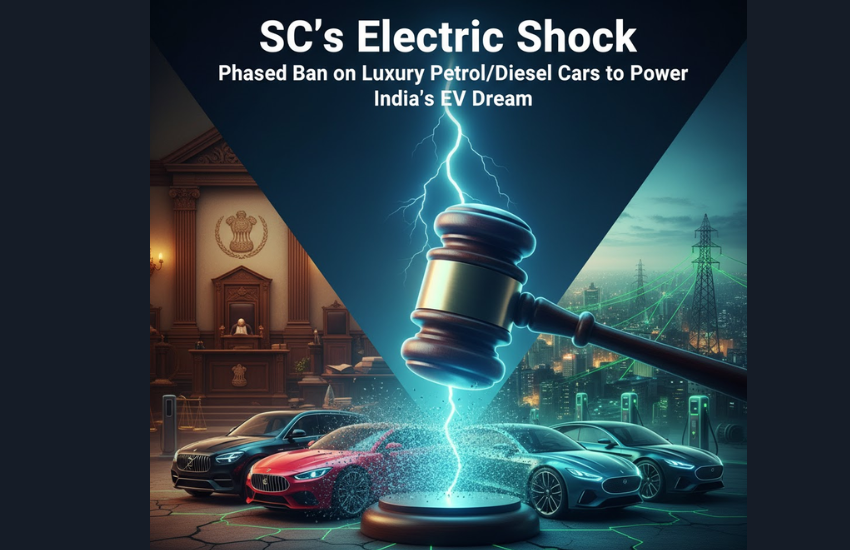
The Supreme Court of India has ignited a massive debate in the automotive industry, suggesting the Central Government should consider a phased ban on high-end luxury petrol and diesel cars to accelerate the nation’s transition to electric mobility. Coupled with a call to revisit the 2020 EV policy, this judicial observation marks a potentially pivotal moment in India’s fight against vehicular pollution and its push for a greener transport future.
Reported on November 14th and 15th, 2025, the suggestion came during a hearing on a Public Interest Litigation (PIL) seeking the effective implementation of the government’s own electric vehicle policies. Here is a detailed look at the Supreme Court’s electrifying suggestion, its rationale, and what it means for India’s auto sector and clean air goals.
The “High-End First” Strategy
Justice Kant, during the hearing, emphasized that any restrictive policy should not burden the common citizen.
Minimizing Social Impact: The court suggested, “Just think of imposing a ban on the very high-end vehicles first of all. So it will not affect the common man, because a very small part of the Indian population can afford that.”
Availability of EV Alternatives: The bench noted that the market now offers high-end, larger electric vehicles that match the comfort and performance of their Internal Combustion Engine (ICE) luxury counterparts, which are often preferred by VIPs and large corporations. This availability makes the shift less disruptive for the luxury segment.
Sending a Strong Signal: Restricting luxury ICE vehicles first would serve as a strong policy signal to both manufacturers and consumers about the country’s firm commitment to green mobility.
Revisiting the 2020 EV Policy
The court also pointed out that the government’s previous electric vehicle policy frameworks, including the National Electric Mobility Mission Plan (NEMMP) and the 2020 policy review, may now be outdated.
Need for an Update: The bench suggested, “Even the policy may need to be revisited,” given the significant technological advancements and market changes over the past few years.
Pilot Projects: The suggestion included launching pilot projects in major metropolitan cities like Delhi, Mumbai, Kolkata, Chennai, and Bengaluru to test the updated policy and accelerate the transition in high-pollution zones.
The Government and Industry Response
The suggestion from the Supreme Court has garnered a supportive, yet cautious, response from the government.
Government’s Stance: Attorney General R. Venkataramani, representing the Centre, informed the court that the government is “alive to the idea” and that a massive inter-ministerial coordination is underway. He stated that 13 different ministries are actively involved in the project for the promotion and adoption of EVs.
Status Report: The court directed the Centre to submit a consolidated status report detailing all notifications and progress made so far in EV policy implementation within four weeks.
Industry Implications: While a ban could be a boon for EV manufacturers, it presents a significant challenge to traditional luxury car makers who rely on high-margin ICE vehicles. They will need to drastically accelerate their transition to electric-only portfolios for the Indian market.
A core issue raised by the petitioners (Centre for Public Interest Litigation, Common Cause, etc.) was the slow expansion of charging infrastructure, which acts as a major roadblock for wider EV adoption.