
India–EU Trade Deal: How It Will Impact Electric Cars in India
India and the European Union recently finalized a major trade agreement that is expected to bring long-term changes to the Indian automobile market, especially in the electric vehicle (EV) segment. This deal focuses on reducing import duties on vehicles coming from European countries, which will eventually make premium electric cars more accessible to Indian buyers. However, the impact will be gradual rather than immediate, as the agreement includes a phased implementation plan to protect domestic manufacturers.
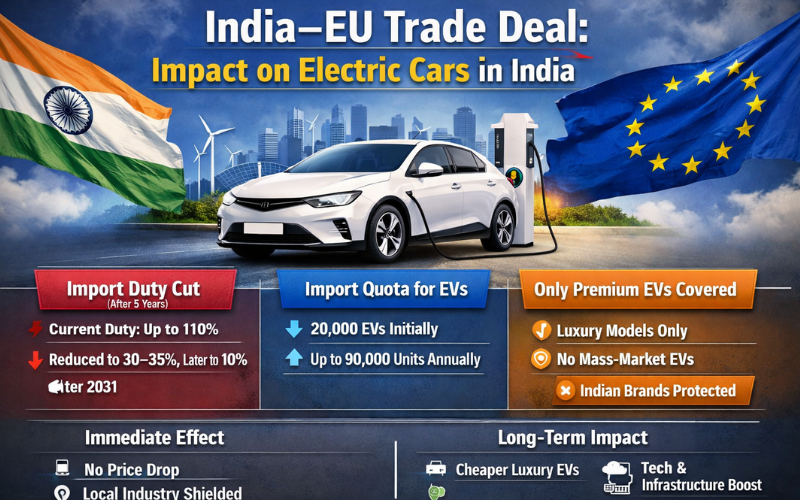
At present, electric vehicles imported into India attract very high import duties, making European EVs expensive and limiting their market reach. Under the new trade agreement, these import duties will be reduced significantly, but only after a protection period of around five years. This means that for the next few years, Indian electric car prices are unlikely to see any major reduction due to this deal. The main aim during this phase is to allow Indian EV manufacturers enough time to strengthen their technology, production capacity, and market presence.
Another important feature of the trade agreement is the introduction of annual import limits on European electric cars. Initially, a limited number of EVs will be allowed to enter India at reduced duties, and this number will gradually increase over time. This step ensures that the Indian market is not suddenly flooded with imported vehicles, which could harm local manufacturers. It also encourages healthy competition without disrupting the growth of India’s domestic EV ecosystem.
The agreement mainly benefits premium and luxury electric vehicles, while mass-market EVs remain protected. This approach supports Indian brands that focus on affordable electric cars, helping them continue to expand in the price-sensitive Indian market. At the same time, European luxury EV brands will gain better access to India in the long run, which could lead to improved product choices, advanced technology, and better overall quality standards in the premium segment.
In the long term, the India–EU trade deal is expected to encourage technology transfer, stronger supply chains, and improvements in battery and charging infrastructure. As European brands bring in advanced electric vehicle technologies, Indian manufacturers can adopt and adapt these innovations to enhance their own products. This collaboration could accelerate India’s transition toward cleaner mobility and support the country’s broader sustainability goals.
Overall, while the India–EU trade deal will not immediately reduce electric car prices in India, it sets the stage for major changes in the coming years. From 2030 onwards, Indian consumers can expect more affordable premium electric vehicles, better technology, and stronger competition, which will ultimately benefit buyers and strengthen India’s position in the global EV market.