
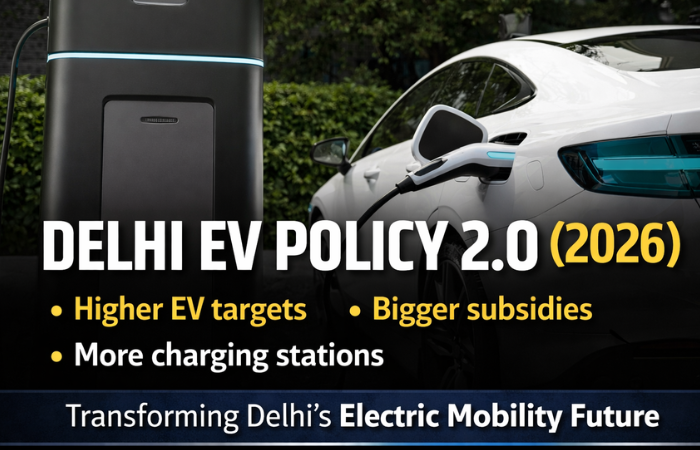
The government of Delhi is getting ready to roll out its new EV Policy 2.0 in 2026, and it’s a pretty big step towards making electric vehicles more common in the city. The earlier policy, launched in 2020, already helped Delhi become one of the top EV markets in India, especially for electric scooters and autos. Now, with this updated version, the focus is on pushing adoption even faster while improving charging infrastructure and making EVs more practical for everyday use.
One of the main highlights of the new policy is the higher target for EV adoption. The government is aiming for around 30–35% of all vehicles to be electric by 2030, which is quite ambitious. To support this, the policy is expected to continue offering subsidies on electric two-wheelers, autos, and even some electric cars. Buyers will likely still get benefits like road tax exemption and free registration, which helps reduce the overall cost. The idea is simple—make EVs affordable enough so that people naturally start choosing them over petrol or diesel vehicles.
Another big focus area is charging infrastructure. Right now, range anxiety is still a concern for many people, but the new policy plans to fix that by increasing the number of charging stations across the city. The goal is to have charging points every few kilometers, along with mandatory charging setups in new residential and commercial buildings. There will also be more fast-charging options, which can significantly reduce charging time and make EVs more convenient to use.
Public transport is also going to see a major shift. The government wants to move towards fully electric buses and auto-rickshaws in a phased manner, which can make a huge difference in reducing pollution levels. Delhi has been dealing with serious air quality issues for years, and switching public transport to electric is one of the most effective ways to tackle that problem.
For businesses, especially those running delivery services or fleet operations, this policy opens up a lot of opportunities. Electric vehicles have lower running and maintenance costs, so companies can save money in the long run. The government is also expected to support fleet electrification, which could speed up the transition in sectors like logistics and ride-hailing.
Why Delhi EV Policy 2.0 Is Important
Delhi has been struggling with severe air pollution. This policy is designed to:
- Reduce carbon emissions
- Improve air quality
- 🚗 Promote sustainable transport
- Reduce dependency on fossil fuels
Delhi already leads India in EV adoption, and this policy aims to cement its position as the EV capital of India.
Overall, Delhi EV Policy 2.0 feels like a natural next step. It’s not just about promoting electric vehicles anymore—it’s about building a complete ecosystem where EVs are easy to buy, easy to charge, and practical to use every day. If everything goes as planned, we could see Delhi becoming one of the leading EV cities not just in India, but globally.