
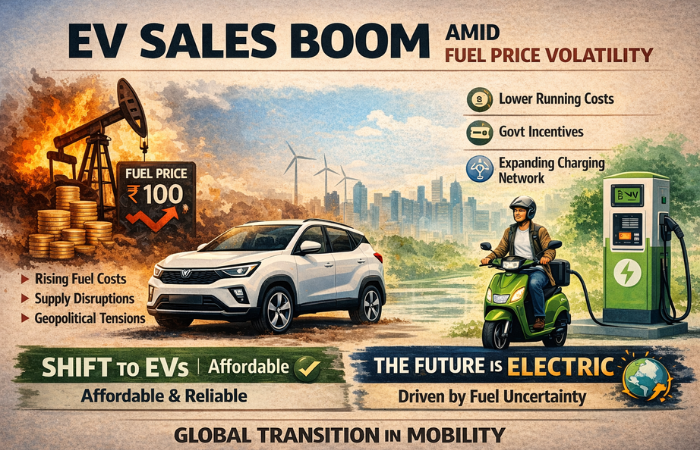
Rising fuel price volatility across the globe—driven by geopolitical tensions, supply disruptions, and fluctuating crude oil markets—has significantly changed consumer behavior in the automobile sector. In countries like India, where fuel costs directly impact daily expenses, petrol and diesel price uncertainty has pushed buyers to look for more stable and predictable alternatives. This shift is not just about saving money, but also about reducing dependency on traditional fuels that are becoming increasingly unreliable and expensive.
Electric vehicles (EVs) have emerged as the biggest beneficiary of this situation. With much lower running costs, minimal maintenance, and immunity from fuel price fluctuations, EVs are now seen as a practical and economically smart choice rather than just an eco-friendly option. Government incentives, expanding charging infrastructure, and improved battery technology have further accelerated adoption. From electric scooters to premium electric SUVs, demand is rising rapidly across both personal and commercial segments
The current surge in EV sales reflects a deeper, long-term transition in mobility. As fuel instability continues and technology improves, EVs are expected to become even more affordable and accessible. While challenges like charging infrastructure and upfront costs still exist, ongoing investments and policy support are steadily addressing them. The trend clearly indicates that fuel volatility is not just a temporary trigger—it is a key force driving the global shift toward electric mobility.
EV Cost Calculator & Compare Tool
EV Running Cost Calculator
Estimate your EV's running costs.
Calculation Type
Estimated Cost
₹--
Estimated Cost Per Kilometer
₹--
Calculations are estimates based on provided values.