
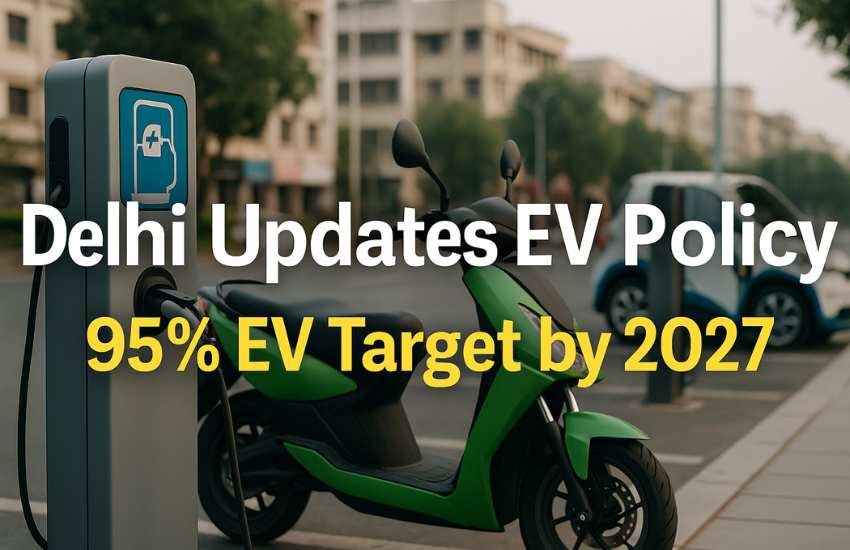
The Delhi government is in the process of updating its electric vehicle (EV) policy to accelerate the city’s transition to clean mobility. The revised strategy places strong emphasis on battery recycling and safe disposal, digital tracking of EV components, and large-scale expansion of charging infrastructure, while setting an ambitious goal of achieving 95% electric vehicle registrations by 2027.
The updated EV roadmap is aimed at addressing both adoption challenges and environmental concerns associated with the rapid growth of electric vehicles in the capital. Officials believe the new measures will strengthen the EV ecosystem while ensuring sustainability and safety.
Strong Focus on Battery Recycling and Disposal
One of the key highlights of the updated policy is the focus on responsible battery management. With the rising number of electric two-wheelers, cars and commercial vehicles on Delhi roads, the government plans to introduce structured systems for collection, recycling and disposal of used EV batteries.
The policy proposes the development of authorised recycling facilities and improved monitoring mechanisms to prevent unsafe handling of lithium-ion batteries. By encouraging proper end-of-life management, the government aims to reduce environmental risks such as soil contamination and fire hazards linked to improper battery disposal.
Digital Tracking of EV Batteries
To improve transparency and accountability, the Delhi government is also planning to introduce digital tracking systems for EV batteries. These systems will help track batteries across their life cycle — from manufacturing and usage to recycling.
Digital monitoring is expected to help authorities ensure compliance with safety standards, prevent illegal dumping, and improve coordination between manufacturers, users and recyclers. The move is also aimed at building consumer confidence as EV adoption continues to grow.
Target of 95% EV Registrations by 2027
The most ambitious element of the updated EV policy is the target of 95% electric vehicle registrations by 2027. This goal reflects Delhi’s push to reduce vehicular emissions and combat air pollution through cleaner transport solutions.
The government is expected to continue policy support for electric two-wheelers, public transport, and commercial EVs, while encouraging private adoption through improved infrastructure and ecosystem readiness.