
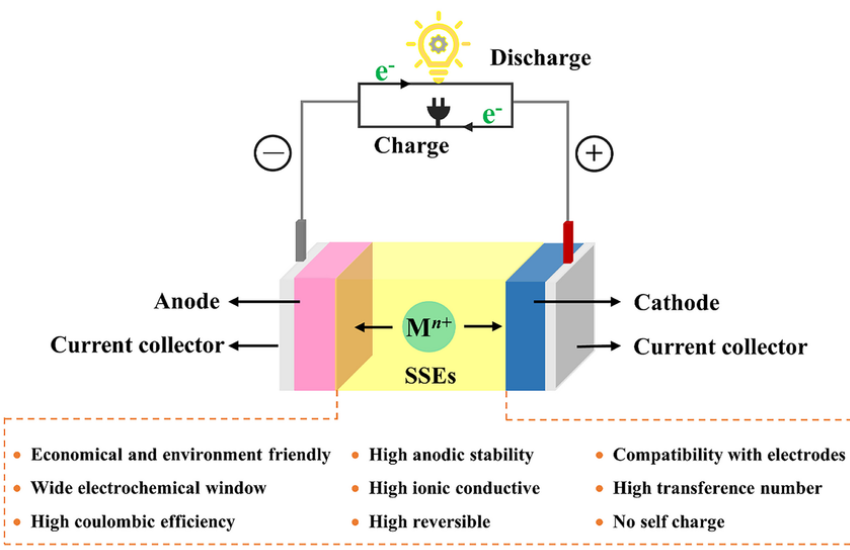
A solid-state battery is an advanced rechargeable battery that uses a solid electrolyte instead of the liquid electrolyte found in normal lithium-ion batteries. Because the liquid is replaced by a solid material like ceramic, glass, or solid polymer, the battery becomes safer, lasts longer, and stores more energy. This technology is seen as the future of electric vehicles (EVs) and modern gadgets.
In a traditional lithium-ion battery, lithium ions move through a liquid electrolyte between the anode and cathode. This liquid can heat up, leak, or even catch fire.
But in a solid-state battery, these ions move through a solid electrolyte. This solid layer is more stable, which makes the battery safer and allows new materials like lithium metal to be used for even higher energy storage.
Solid-state batteries offer many powerful advantages. They provide higher energy density, allowing EVs to drive 800–1200 km on a single charge and helping smartphones last 2–3 days easily. They also support much faster charging, with some designs capable of going from 0–80% in just 10–15 minutes without overheating. These batteries are much safer because they don’t use flammable liquid electrolytes, reducing the risk of fire and making them more stable in accidents or extreme temperatures. Their longer life is another big benefit, as the solid electrolyte does not degrade quickly, enabling 2,000–5,000 charging cycles and giving EVs a lifespan of 10–15 years. Solid-state batteries are also smaller and lighter, which helps EVs and gadgets become more compact, efficient, and lightweight.
They are especially important for the future of electric vehicles, as they address major concerns like low driving range, long charging times, safety risks, and battery degradation. Leading companies such as Toyota, Nissan, BMW, Hyundai, Samsung, and QuantumScape are working to bring this technology to market. In phones and laptops, solid-state batteries will offer more backup, less heating, and better long-term performance. For renewable energy, they are ideal for storing solar and wind energy because of their stability and efficiency.
Many companies aim to launch solid-state EV batteries by:
Toyota: 2027–2028
Nissan: 2028
Others around 2030
Smartphones may get solid-state batteries even earlier.